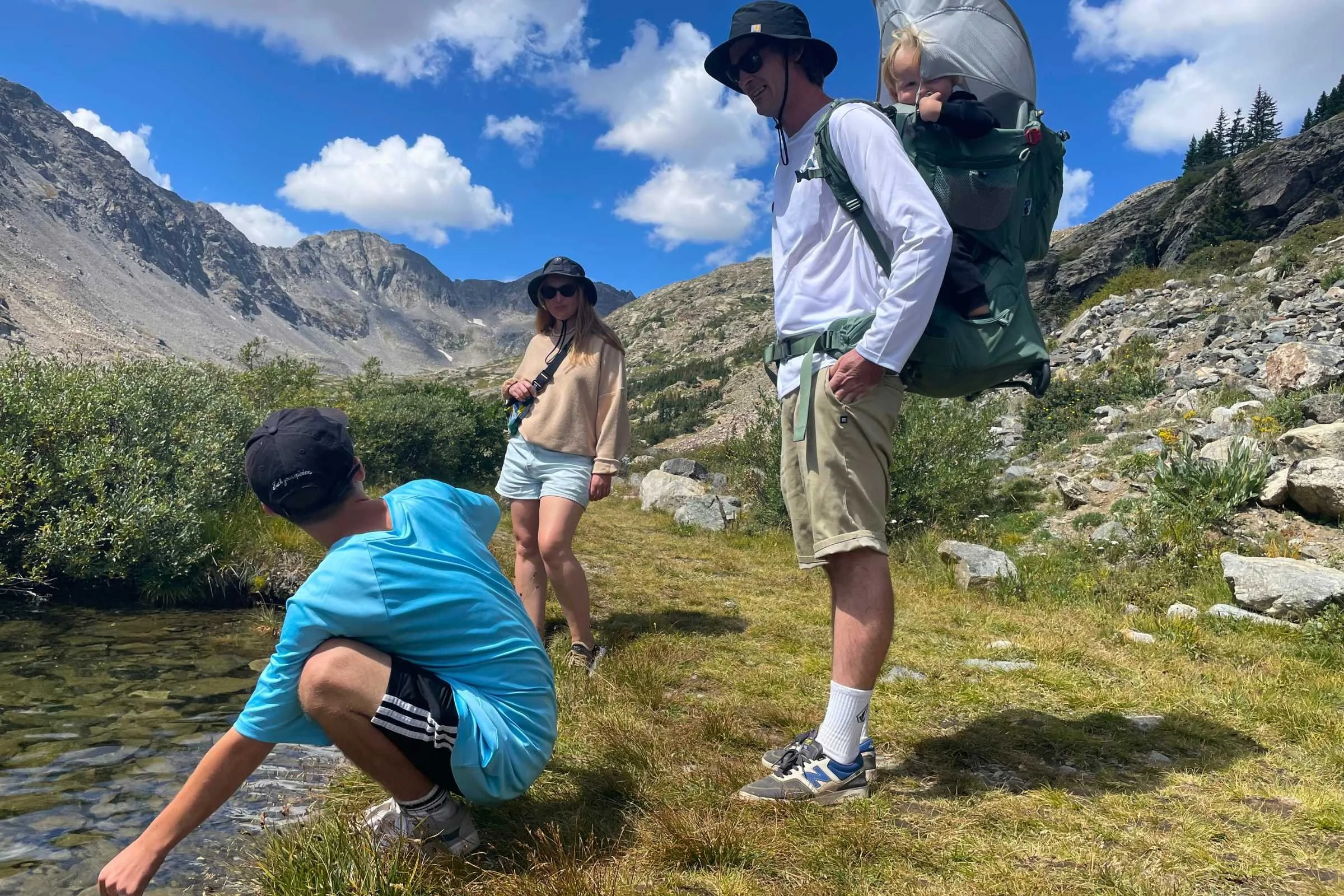
Our Top Picks
- Top Performance: Deuter Kid Comfort – The best overall for technical trails and heavy toddlers because of its elite suspension and breathability.
- Best for Gear: Osprey Poco Premium – Unbeatable 36L storage capacity and integrated sunshade for all-day adventures.
- Best for Travel: Osprey Poco SLT – Exceptional lightweight design and a folding frame making it the best travel-friendly option.
- Best Value: Kelty Journey PerfectFIT – A reliable, safe, and simplified choice for parents seeking an entry-level hiking baby carrier.
The best hiking baby carrier depends on your torso size and toddler's weight, with the Deuter Kid Comfort and Osprey Poco Premium leading the 2026 market for safety and comfort.
Why You Need a Framed Baby Carrier for Toddlers
We have spent hundreds of miles on the trail with little ones, and the most common question we get is when to switch from a soft wrap to a structured child carrier backpack. In the industry, we call it the 20lb/2-mile rule. Once your toddler hits 20 pounds, or you start hiking more than two miles at a time, the lack of structural support in a soft carrier will start to wreck your back. Unlike soft carriers, a framed baby carrier uses a rigid internal structure to shift the load from your shoulders to your hips.
This shift is more important than ever. According to the Outdoor Industry Association’s 2026 Outdoor Participation Trends Report, a record 66% of U.S. households with children participated in outdoor recreation activities in 2025. With more families hitting the trails, the global hiking gear and equipment market is projected to reach an estimated valuation of $91.45 billion by the end of 2026, growing at a compound annual rate of 6.31%. Investing in the right gear ensures those family memories aren't ruined by avoidable aches and pains.
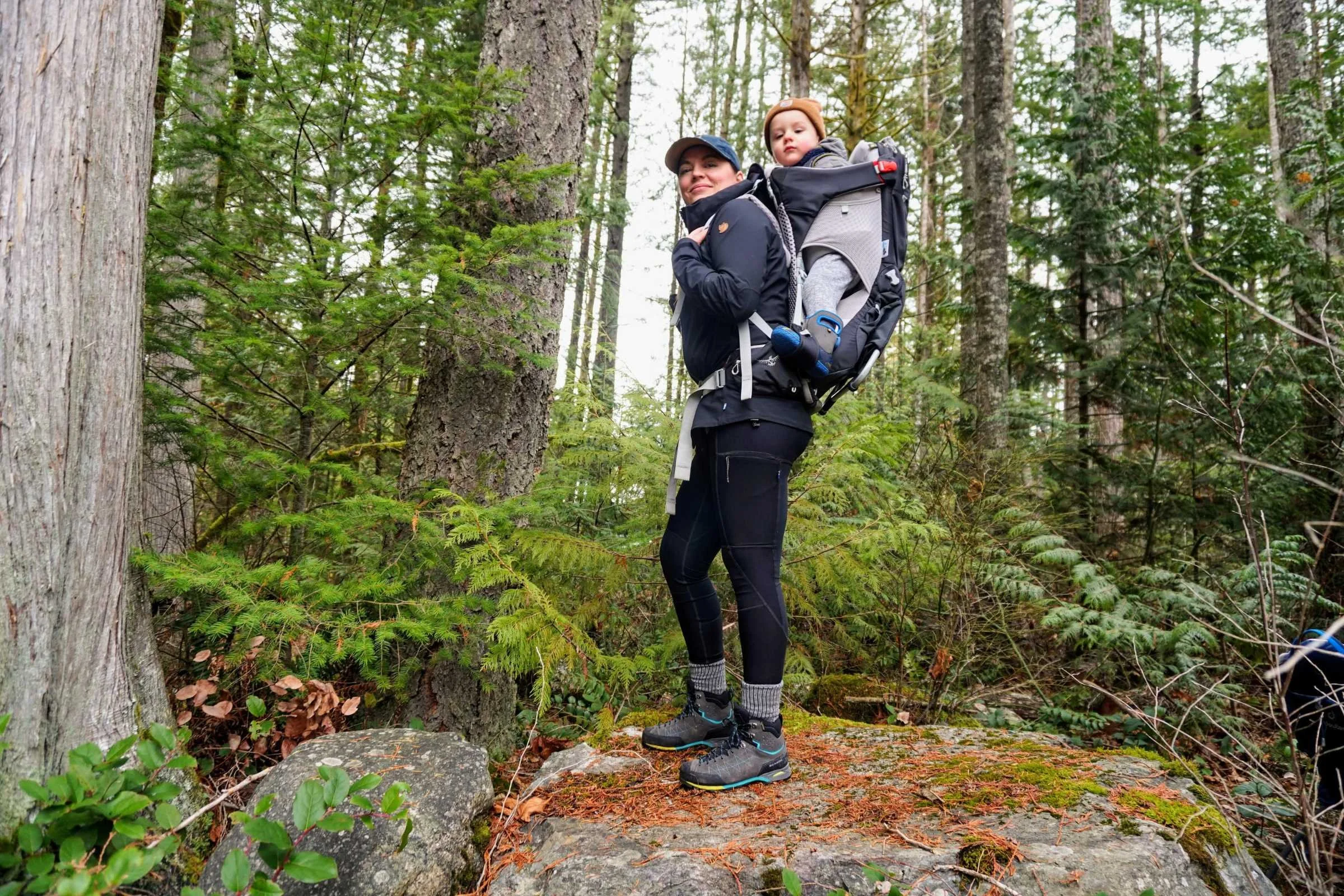
1. Osprey Poco Premium: The Gear-Heavy Standard
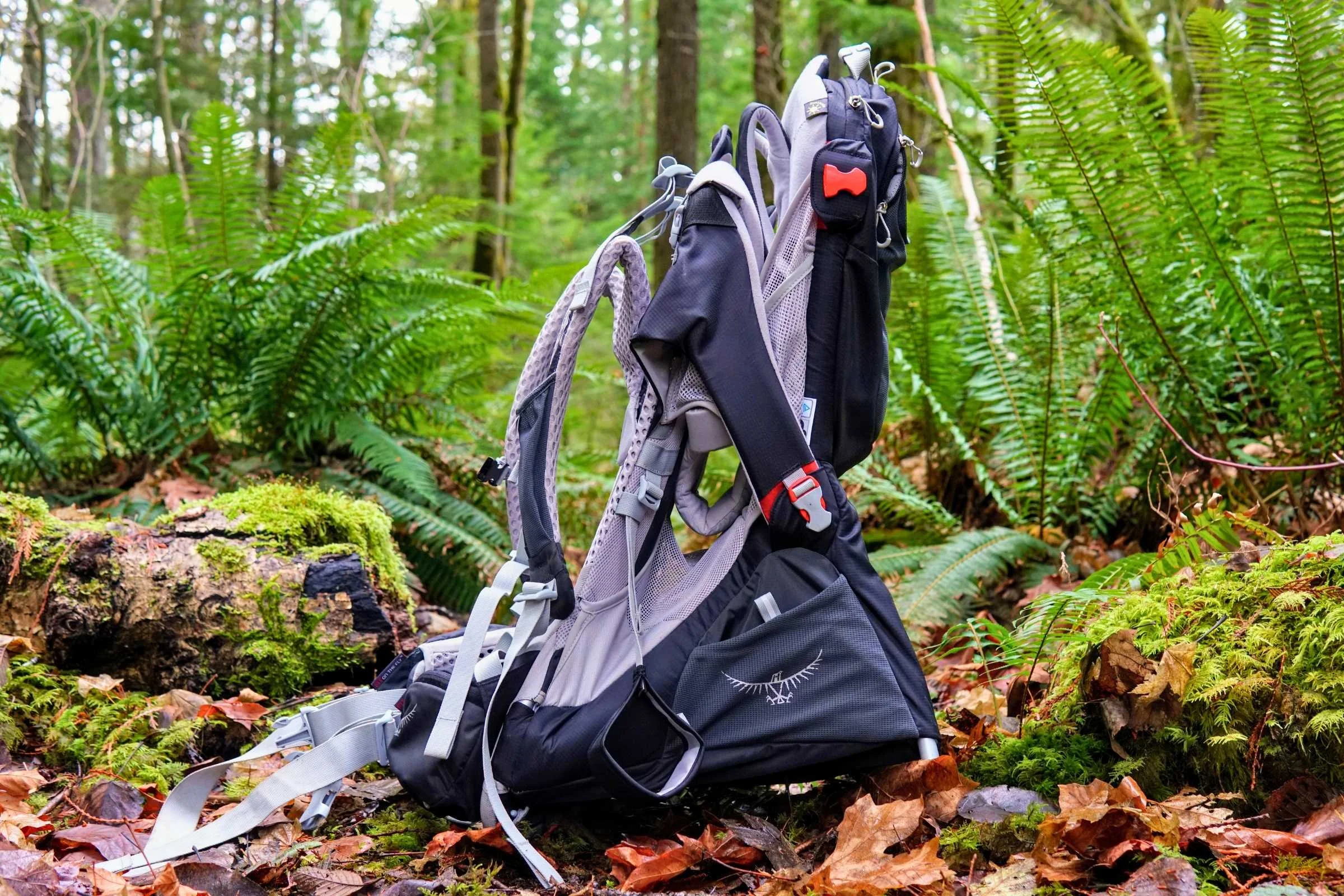
If you are the type of parent who packs for every possible scenario, the Osprey Poco Premium is your new best friend. This child carrier backpack is designed for long hauls where you need to carry both a toddler and a mountain of supplies. With a massive 36 liters of storage, you won't have to choose between extra diapers and your favorite camera gear. It even includes a dedicated hydration reservoir sleeve for your water bladder so you can stay hydrated without stopping.
The comfort for the child is world-class, featuring a built-in UPF 50+ sunshade that deploys in seconds. For the parents, the Poco excels as an adjustable hiking carrier for tall and short parents because the pack offers a 15-31 inch torso range. The padded harness and plush shoulder straps make it easy to manage a heavy load, even on steep inclines.
Pros
- Massive storage capacity for long day hikes
- Integrated high-quality sunshade comes standard
- Wide range for torso length adjustment
Cons
- One of the heavier empty weights on the market
- High price point compared to entry-level models
- The wide profile can catch on narrow brush
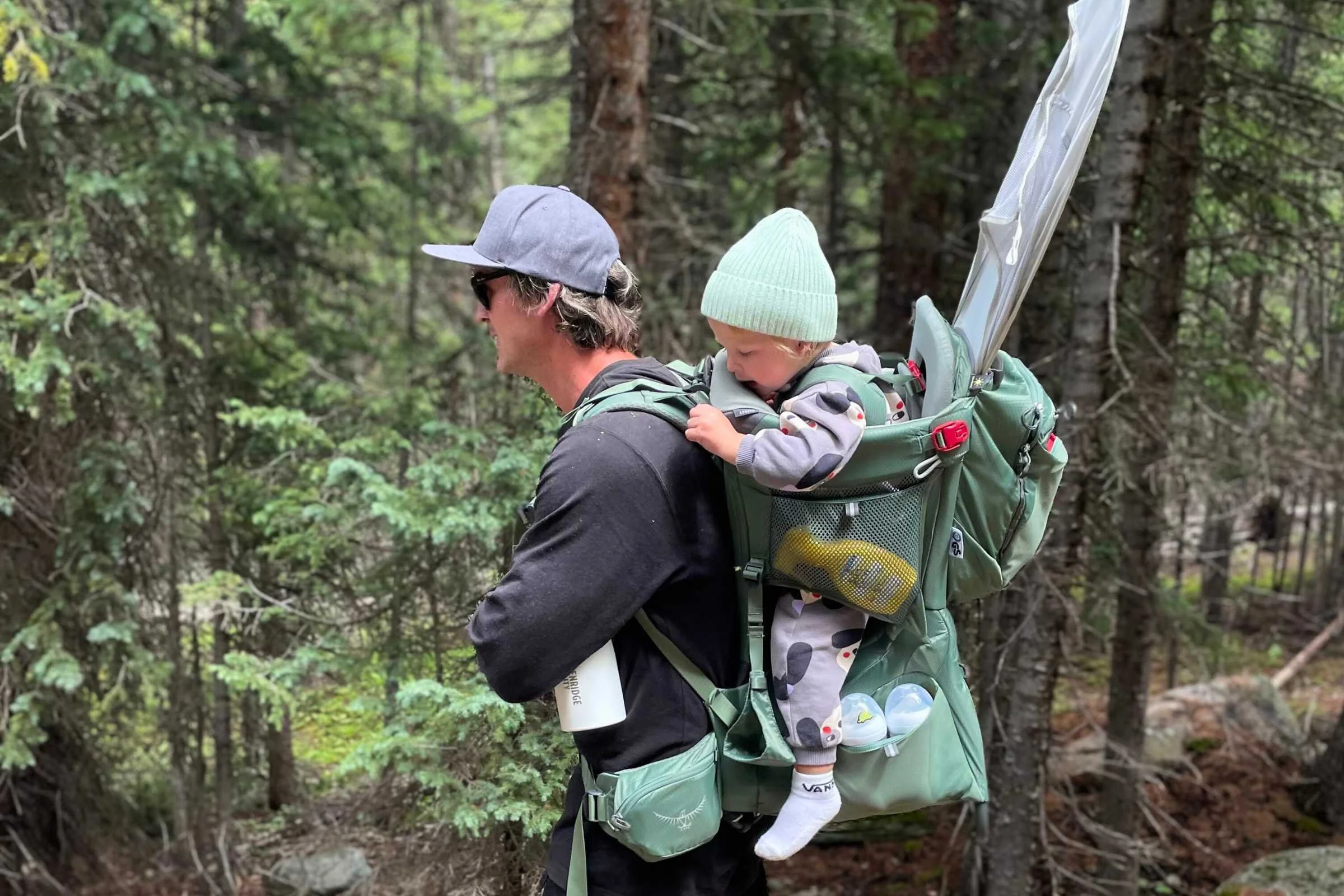
2. Deuter Kid Comfort: Best for technical trails and ventilation
The Deuter Kid Comfort is a top choice for carrying toddlers due to its superior agility and ventilation. It features a sturdy aluminum frame and an integrated kickstand for stability when you are loading your child on the ground. While it offers less storage volume than some competitors, its harness system and weight distribution are highly effective for older babies and toddlers on technical trails.
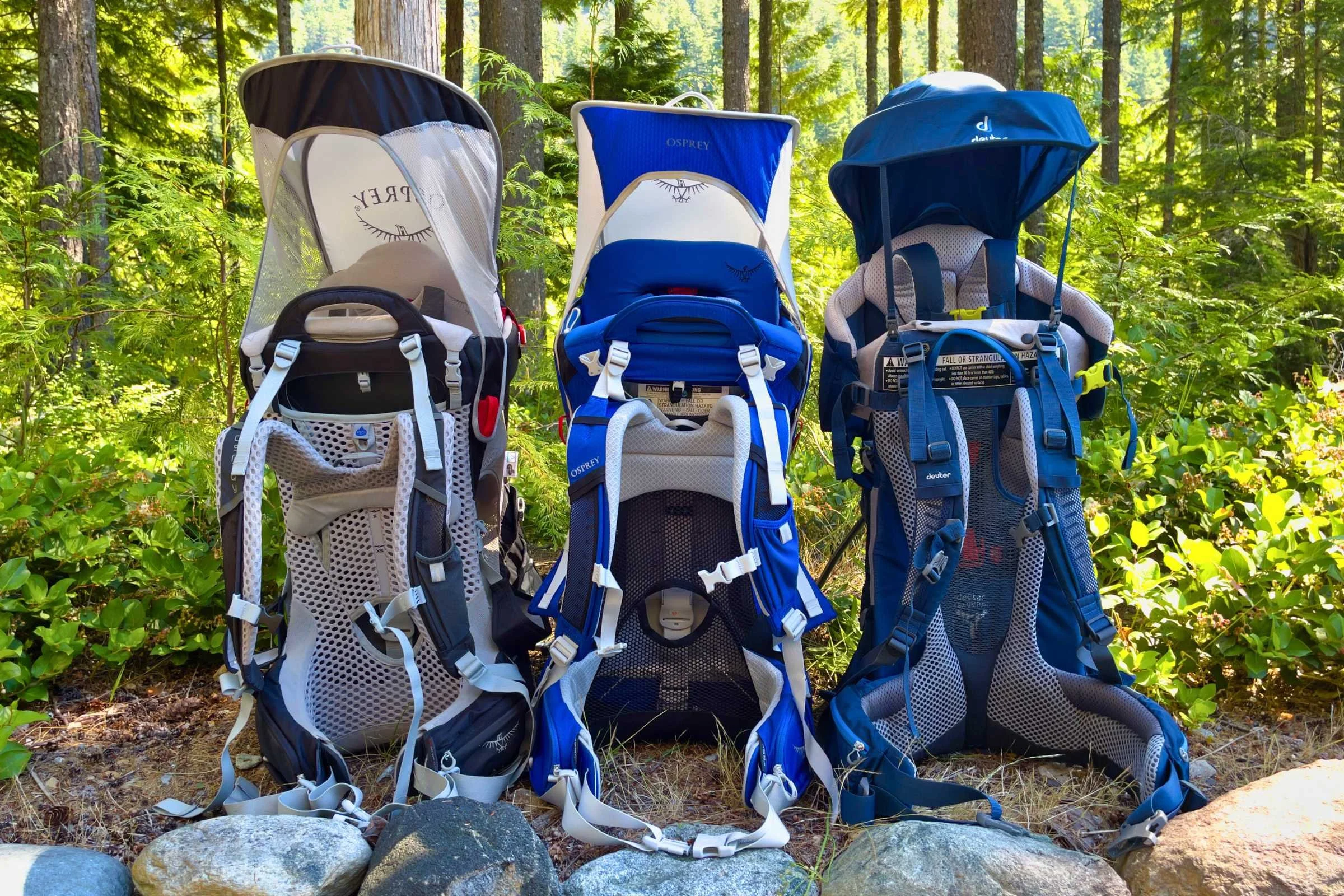
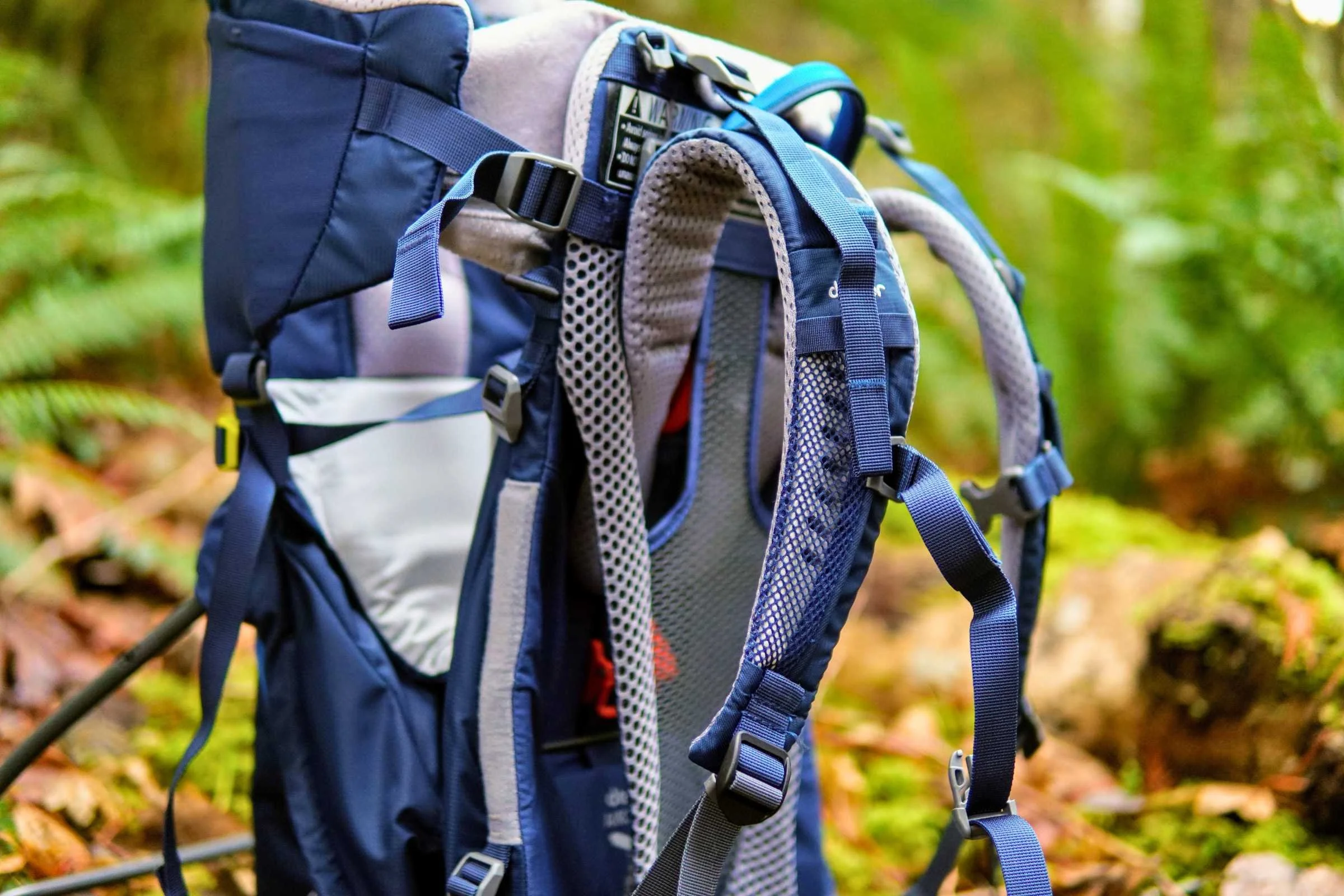
In the osprey poco vs deuter kid comfort for toddlers debate, the Deuter often wins for parents who sweat. Its Aircomfort mesh suspension system creates a gap between the pack and your back, allowing air to circulate freely. It is arguably the most comfortable hiking baby carrier for back pain relief because of how the VariSlide system allows you to fine-tune the fit to your exact spine length. The streamlined design feels more like a standard hiking pack, making it easier to navigate rocky scrambles or narrow forest paths.
Pros
- Superior mesh suspension system for ventilation
- Agile frame remains stable on uneven ground
- Very intuitive torso length adjustment
Cons
- Noticeably less storage than the Osprey Premium
- Sunshade is often sold separately or is less integrated
- Kickstand can sometimes be stiff to retract while wearing
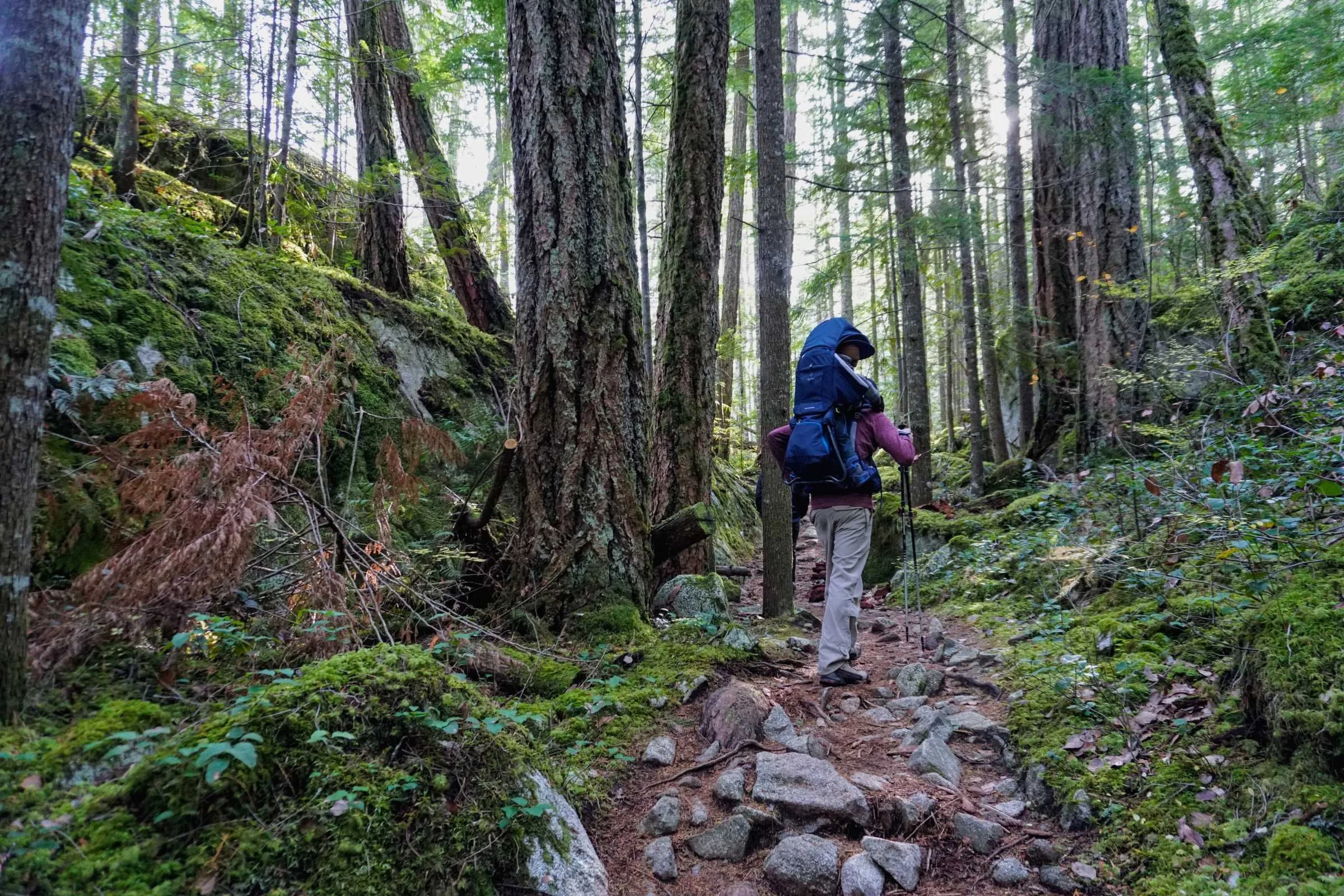
3. Osprey Poco SLT: The Lightweight Travel Choice
Not every hike requires a heavy-duty camping setup. Sometimes you just need a lightweight framed child carrier for travel and errands, like visiting a national park or walking through a crowded street market. Weighing in at only 4.72 lbs, the Osprey Poco SLT is the minimalist version of the Poco line. It sacrifices some of the heavy padding and massive storage for a sleek, folding frame that is a game-changer for parents on the go.
The SLT uses high-quality ripstop durability to ensure it can handle the rigors of travel. It still maintains a secure 5-point safety harness and a sternum strap to keep the load centered. This is the model to choose if you are frequently moving the carrier in and out of a car trunk or need to fit it into an overhead bin on a flight.
Pros
- Lightest framed pack in the Osprey lineup
- Folding frame simplifies storage and transport
- Maintains essential trail safety features
Cons
- Not ideal for toddlers over 35 lbs for long distances
- Minimal storage capacity for extra gear
- Less cushioning on the hip belt compared to the Premium
4. [Budget Pick]: Best Budget Hiking Baby Carrier Under $300
For families who want to explore the outdoors without breaking the bank, the Kelty Journey PerfectFIT stands out as the best budget hiking baby carrier under $300. It doesn't have the bells and whistles of the $450 luxury models, but it hits every necessary safety mark. You still get a reliable 5-point safety harness and adjustable foot stirrups to prevent your toddler's legs from dangling and losing circulation.
The PerfectFIT system is designed to allow one parent to quickly adjust the pack height while the other parent takes a turn carrying. While the storage is limited to a small pocket under the seat, the ergonomics for the child remain high. It is a fantastic hiking backpack for toddlers over 40 lbs because the frame is rated for a high total weight capacity, despite the carrier's simple design.
Pros
- Highly affordable for occasional hikers
- Easy-to-use adjustment system for multiple wearers
- Robust safety harness for child security
Cons
- No integrated sunshade (must be bought separately)
- Back panel can get quite hot due to lack of mesh
- Shoulder straps are less cushioned for long treks
Essential Comparison Table: Specs & Fit
When deciding which model to buy, it helps to look at the sizing and fit metrics side-by-side. Use this table to see how these carriers handle the physical demands of the trail.
| Model | Unit Weight | Max Child Weight | Torso Range | Storage Volume |
|---|---|---|---|---|
| Osprey Poco Premium | 7.89 lbs | 48 lbs | 15 - 21 inches | 36 Liters |
| Deuter Kid Comfort | 7.12 lbs | 48 lbs | 15 - 20 inches | 14 Liters |
| Osprey Poco SLT | 4.72 lbs | 48 lbs | 15 - 21 inches | 20 Liters |
| Kelty Journey PerfectFIT | 5.30 lbs | 48 lbs | 15.5 - 21 inches | 14 Liters |
Safety First: Recalls and Ergonomics
Before you head out, you must understand the safety features of structured backpack child carriers. In the past decade, there have been a few notable recalls, such as specific Deuter models between 2023-25 and Osprey models back in 2017, usually involving minor harness strap issues. Always check the manufacturer's website for your specific serial number to ensure your pack is up to date on safety standards.
Beyond recalls, trail safety is about ergonomics. A high-quality carrier should encourage the M-position for the child’s hips, where the knees are slightly higher than the bottom. This prevents hip dysplasia and keeps the child comfortable. Additionally, learning how to fit a child carrier backpack for hiking safely is a skill in itself. Always tighten the hip belt first to ensure the weight sits on your pelvis, then adjust the load-lifter straps to pull the pack closer to your center of gravity. This prevents the pack from swaying and throwing you off balance on technical terrain.
Expert Tip: Never leave a child unattended in a carrier on the ground, even with the integrated kickstand extended. Toddlers can lean suddenly, causing the carrier to tip over.
FAQ
At what age can a baby sit in a hiking carrier?
A baby can typically sit in a hiking carrier once they have strong, consistent head and neck control, which usually happens around 6 months of age. It is vital to ensure they can stay upright without assistance for the duration of the hike.
What is the weight limit for a hiking baby carrier?
Most premium framed carriers have a total weight limit of about 48 to 50 pounds. This includes the weight of the child, the gear packed in the pockets, and the weight of the carrier itself. Always check the specific manual for your model's capacity.
How safe are hiking baby carriers for infants?
Hiking baby carriers are very safe for infants as long as the child meets the age and weight requirements and is secured using a 5-point safety harness. Proper trail safety includes using the sunshade for UV protection and ensuring the child's airway is always clear and visible.
Can one person put on a hiking baby carrier alone?
Yes, a person can put on a carrier alone by using the integrated kickstand to keep the pack upright on a flat, stable surface. However, it is always easier and safer to have a partner assist you, or to use a sturdy bench or the tailgate of a car to help lift the pack onto your back.
How do you keep a baby comfortable in a hiking carrier?
To keep a baby comfortable, adjust the seat height so their chin is above the headrest and use adjustable foot stirrups to support their legs. Frequent breaks out of the pack are also necessary to allow the child to move around and prevent stiff limbs during long excursions.