Quick Facts
- Primary Location: Bayfield, Burnett, Douglas, and Washburn Counties (700,000+ public acres).
- Peak Season: The first two weeks of October.
- Shelter Standard: 12 oz military-grade treated canvas wall tent.
- Essential Scout Tool: Wisconsin DNR FFLIGHT interactive mapping system.
- Population Cycle: A predictable 9-11 year cycle (Expected peaks in years ending in 9, 0, or 1).
- Safety Benchmark: Game birds must be cooked to an internal temperature of 165°F.
- Habitat Key: Early successional forest, specifically 10-20 year old aspen cuts bordering alder swamps.
Establishing a traditional wisconsin grouse camp is more than a hunt; it is a rite of passage into the Northwoods. Whether you are targeting the 700,000 acres of public land in Northwestern Wisconsin or the vast Chequamegon-Nicolet National Forest, the keys to success lie in your scouting and your shelter. This guide breaks down how to identify prime habitat and set up a canvas wall tent camp that withstands the October elements. Since Northwestern Wisconsin counties, including Bayfield, Burnett, Douglas, and Washburn, offer over 700,000 acres of public forest ideal for a wisconsin grouse camp, hunters should utilize the DNR's FFLIGHT map tool to locate young, brushy, aspen-dominated woodlands near the headwaters of the Namekagon, St. Croix, and Bois Brule rivers.
Finding Your Ground: Wisconsin Public Land Grouse Scouting
To build a truly effective wisconsin grouse camp, your foundation must be rooted in geography. The Northwoods of Wisconsin are not a uniform blanket of timber; they are a mosaic of varying forest ages. High-quality wisconsin public land grouse scouting begins long before you hit the gravel roads. We rely on the Wisconsin DNR FFLIGHT interactive map to peer through the canopy. This tool is indispensable for using FFLIGHT map to find wisconsin ruffed grouse spots because it allows you to layer forest age classes, specifically highlighting the early successional habitat that ruffed grouse and american woodcock biology require for survival.
The best northwestern wisconsin counties for grouse hunting camps are undoubtedly Bayfield, Burnett, Douglas, and Washburn. These areas offer the highest density of county forest land, where active timber management creates the "autumn wafers" of young aspen. When you are on the ground, knowing how to identify bird-holding aspen cuts in wisconsin is a matter of looking at stem density. If you can easily walk through the trees without a struggle, the birds likely won't be there. You want the thick, "pencil-sized" aspen stems that are 10 to 20 years old.
Furthermore, pay attention to the transition zones. A prime spot often features young aspen on the uplands that give way to alder swamps or balsam fir in the lowlands. These edges provide the perfect mix of forage and overhead protection. Keep an eye out for drumming log identification; finding a well-worn log with a pile of droppings nearby is a surefire sign that a male ruffed grouse has claimed that territory. While the Northwoods ecology is robust, ruffed grouse populations in Wisconsin follow a predictable 9-to-11-year cycle, with population peaks typically recorded in years that end in 9, 0, or 1. If you are hunting during a "down" year, such as 2026, when data from the Wisconsin Department of Natural Resources indicated an 11% statewide decrease in ruffed grouse drumming activity compared to 2025 levels, your scouting becomes even more critical.
The Iron and Canvas: Canvas Wall Tent Hunting Camp Setup
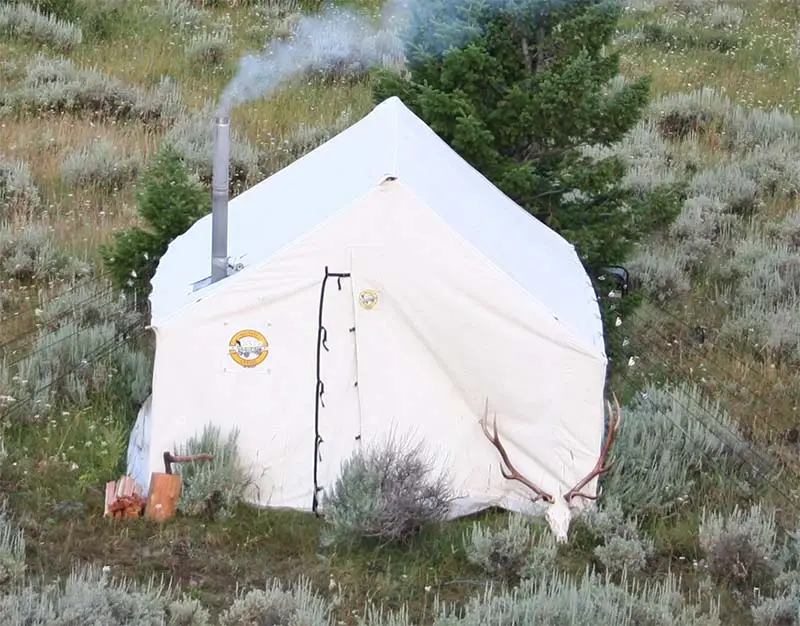
There is a specific soul to a camp built of canvas and woodsmoke. While modern nylon tents are functional, they lack the "Smoothing It" ethos—a philosophy of bringing just enough comfort to the wilderness to make a week-long stay enjoyable. When considering your canvas wall tent hunting camp setup, the weight of the fabric is your most important decision. For the unpredictable Wisconsin October, where a 60-degree afternoon can turn into a 20-degree night, 12oz military-grade canvas is the gold standard.
| Feature | 10oz Canvas | 12oz Canvas |
|---|---|---|
| Insulation Value | Moderate | High (Superior heat retention) |
| Durability | Good for light use | Excellent (High tear resistance) |
| Weather Resistance | Requires frequent treatment | High resistance to snow/heavy rain |
| Weight | Lighter, easier for solo setup | Heavier, best for group camps |
| Best For | Early season/Mild weather | Late season/Traditional wisconsin grouse camp |
A quality tent also requires a robust heating system. The best wood stoves for canvas tents are those constructed of heavy-gauge steel or cast iron, which hold heat longer than thin, packable titanium stoves. Safety should be your priority, which means meticulous canvas wall tent stove jack installation and selectioned carefully. Ensure the stove jack is positioned away from the tent’s ridge and that you utilize a spark arrestor to prevent embers from landing on your roof. Proper weatherproof canvas treatments are also essential to ensure that the "muffled thunder" of a midnight rainstorm stays on the outside of your living quarters.
Beyond the shelter itself, the tradition of the hunt is reflected in the gear we carry. Many hunters in these camps still prefer the balance and heritage of side-by-side shotgunning. There is something inherently right about a double-barrel resting against a pile of canvas. This connection to upland sporting traditions is why a survey of small-game hunting activity in Wisconsin found that 25% of all small-game hunters in the state pursued ruffed grouse during the 2021-2023 seasons.
The Blueprint: Best Canvas Wall Tent Layout for Hunting Camp
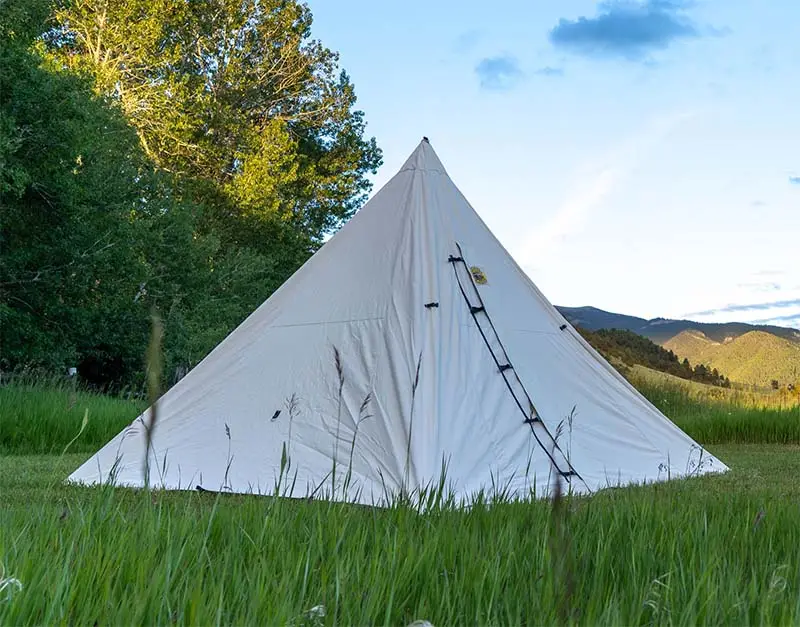
Organization is the difference between a cramped shelter and a home. The best canvas wall tent layout for hunting camp uses an east-west axis. By pitching the tent so the long side faces the south, you maximize the warmth of the autumn sun during the day while positioning the narrow ends to face the prevailing westerly winds.
Inside the tent, we divide the space into three distinct zones:
- The Hearth and Kitchen: Located near the front door for ease of wood hauling. Here, the wood stove sits on a fireproof mat, flanked by a small table for food prep.
- The Sleeping Quarters: Positioned at the back of the tent, furthest from the door to minimize drafts. Utilizing bunk beds or raised cots keeps you off the cold ground and provides storage space underneath for your gear bags.
- The Dog and Gear Zone: A dedicated area near the stove jack where wet boots can dry and pointing dogs can rest on insulated mats.
In a large wisconsin grouse camp involving multiple hunters, it is common to connect two tents end-to-end. One tent serves as a dedicated kitchen and social area, while the second acts as the sleeping car. This prevents the smell of woodcock frying from permeating your sleeping bags and provides a quiet retreat for those who want to turn in early under the peak october foliage. To light the space, suspended propane lanterns offer a warm, nostalgic glow, though many modern camps now integrate marine batteries to power low-draw LED strips.
From Field to Fork: Traditional Grouse Camp Cast Iron Recipes and Gear
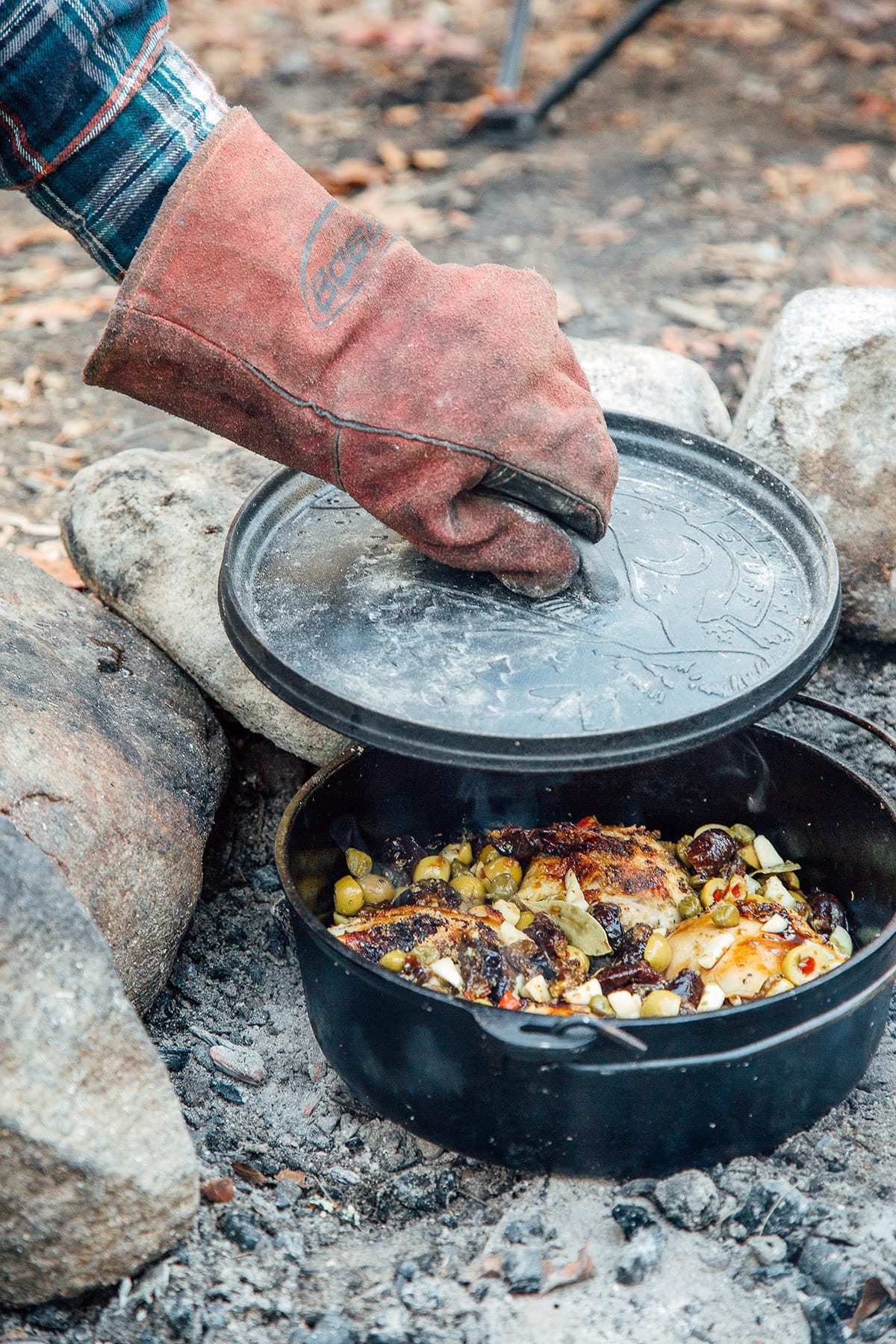
The culmination of national forest recreation is the evening meal. In a traditional grouse camp, the cast iron skillet is the most important tool in the kitchen. Traditional grouse camp cast iron recipes and gear often center around the "holy trinity" of the Northwoods: grouse breasts, butter, and wild mushrooms.
When preparing your harvest, remember that safety is paramount. The Wisconsin DNR bird surveys and health guidelines remind us that all game birds must reach an internal temperature of 165°F. A popular camp favorite is "Northwoods Piccata," where thin-sliced grouse breasts are dredged in seasoned flour, seared in a hot cast iron skillet with plenty of butter, and finished with a splash of white wine and a handful of capers.
Because woodcock are often found in the same coverts, a mixed bag is common. These "timberdoodles" require a different culinary approach. Their meat is dark and rich, more akin to a fine steak than poultry. Many hunters prefer to wrap woodcock breasts in bacon and grill them quickly over the embers of the wood stove, ensuring they remain medium-rare to preserve their delicate flavor. This respect for the bird is a cornerstone of upland sporting traditions. It is also a legal requirement to be HIP certified and to follow all daily bag limits, ensuring that the next generation of hunters can enjoy the same muffled thud of a grouse hitting the forest floor.
FAQ
Where is the best ruffed grouse hunting in Wisconsin?
The highest bird densities are typically found in the northwestern and central-northern counties. Bayfield, Douglas, Sawyer, and Price counties are legendary for their vast expanses of county and national forest land. These regions provide the thick, young forest habitat that grouse require to thrive.
What basic gear is needed for a Wisconsin grouse camp?
A traditional camp requires a heavy-duty canvas wall tent, a wood-burning stove for heat and cooking, comfortable cots, and reliable lighting like propane lanterns. For the hunt itself, you will need a shotgun (preferably a 20-gauge or 28-gauge), brush pants to protect against thorns, and hunter orange clothing for safety.
Where can I find public land suitable for a grouse camp in Wisconsin?
Wisconsin is blessed with millions of acres of public land. The best resources are the Wisconsin DNR website and the Wisconsin County Forest Association maps. These maps differentiate between various types of public ownership, such as State Forests, County Forests, and National Forests, all of which generally allow dispersed camping during the hunting season.
How do I plan a DIY grouse hunting trip to Wisconsin?
Start by choosing your dates, ideally in early October when the leaves begin to drop. Use the FFLIGHT mapping tool to identify active logging areas from 10-15 years ago. Purchase your small-game license and HIP certification online through the Go Wild Wisconsin portal. Finally, ensure your camp gear is tested and ready for cold nights.
What is the peak time of year for grouse hunting in Wisconsin?
While the season typically opens in mid-September, the peak time is often the first two to three weeks of October. During this window, the "leaf drop" occurs, making birds much easier to see. Additionally, the crisp mornings are better for hunting dogs, who can work longer and more effectively in cooler temperatures.