Quick Facts
- Safety Radius: Maintain a distance of 1.5x the height of the tallest nearby tree to avoid falling hazards.
- Water Proximity: Sites must be located at least 200 feet away from lakes, streams, and trails to protect riparian zones.
- Optimal Slope: Aim for a subtle incline of 2 to 5 degrees to ensure proper water drainage without sacrificing comfort.
- Thermal Threshold: Tents lacking natural shade usually begin to overheat by 9:00 AM, affecting sleep quality.
- Market Demand: In 2024, 56.1% of U.S. campers reported difficulty finding available sites due to high booking rates.
- Popularity Trends: Data shows 80% of campers plan to camp in or around a national park in 2025, making selective criteria even more vital.
- Governance: The 2025 EXPLORE Act now formalizes specific wilderness access and backcountry protocols.
Choosing the right spot is more than just finding a pretty view; it is a fundamental skill for survival and comfort. Effective campsite selection requires finding level ground and avoiding hazard trees to ensure a secure night’s sleep. To ensure safety, prioritize high ground away from drainage basins and maintain a 1.5x height distance from dead trees to mitigate the risk of falling debris.
Rule 1: Look Up — Identifying Widowmakers and Canopy Hazards
Before you even drop your pack, you must perform a vertical inspection. In the world of outdoor safety, few things are as dangerous as widowmakers. These are dead or detached tree limbs that can fall at any moment, often triggered by a slight breeze. Identifying widowmaker trees when camping is a non-negotiable first step in your safety protocol. Look for trees with missing bark, fungal conks growing on the trunk, or branches that lack pine needles or leaves while surrounding trees are lush.
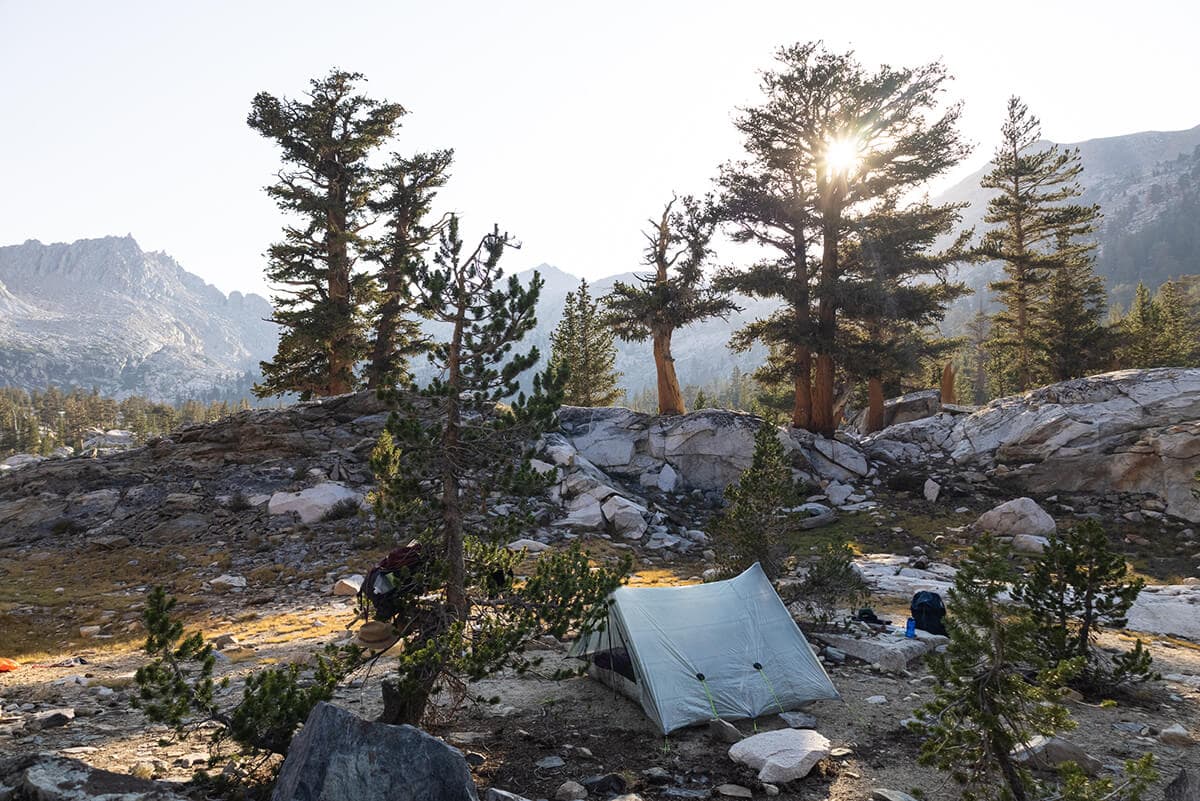
To manage campsite safety factors effectively, apply the 1.5x height rule. Do not pitch your tent within a radius equal to one and a half times the height of any suspicious tree. If a tree is 60 feet tall and appears distressed, your tent should be at least 90 feet away. The canopy provides natural shelter from light rain, but it should never become a liability during a midnight windstorm. Always prefer healthy, young stands of trees over old-growth areas that may contain hidden rot.
Rule 2: Ground Truth — Prioritizing Level Ground and Soil Stability
Once the overhead area is clear, focus on the topography beneath your feet. For optimal thermoregulation and comfort, you need to know how to choose a flat campsite for sleeping. However, "flat" is a relative term. A perfectly 0-degree surface can actually be a liability because it allows water to pool directly under your tent floor. Instead, look for a site with a gentle 2 to 5-degree slope. This micro-elevation allows for natural drainage while remaining negligible enough that you won't slide off your sleeping pad.
Before committing to a site, use the Heel-Stamp Test. Drive your heel into the ground with moderate force. If the soil is too soft or sandy, your stakes won't hold in high winds. If it is too hard or rocky, you risk damaging your gear or suffering from poor ground insulation. Your safe tent placement depends entirely on the marriage of soil stability and subtle pitch.
Rule 3: Respect the Riparian — The 200-Foot Water Rule
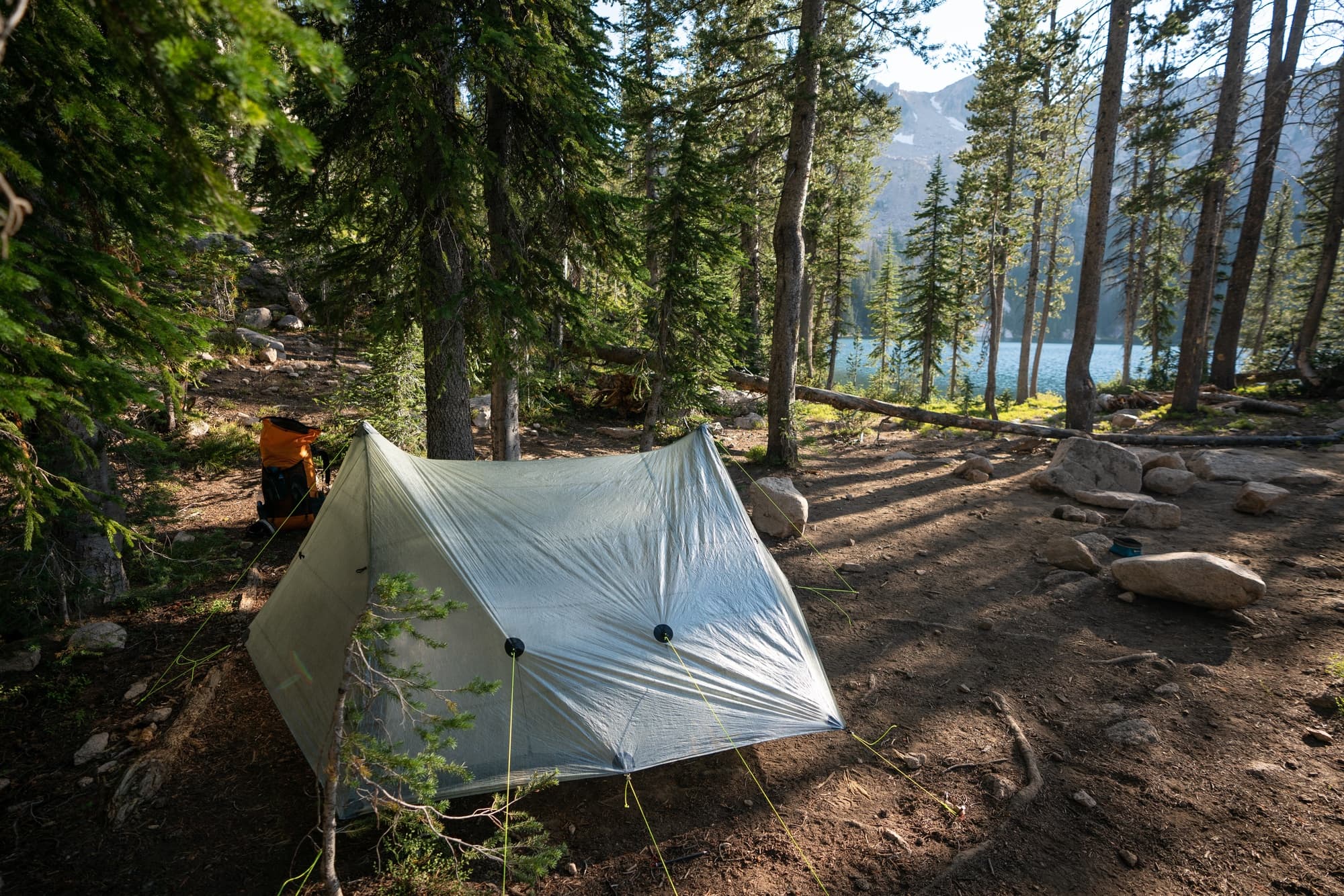
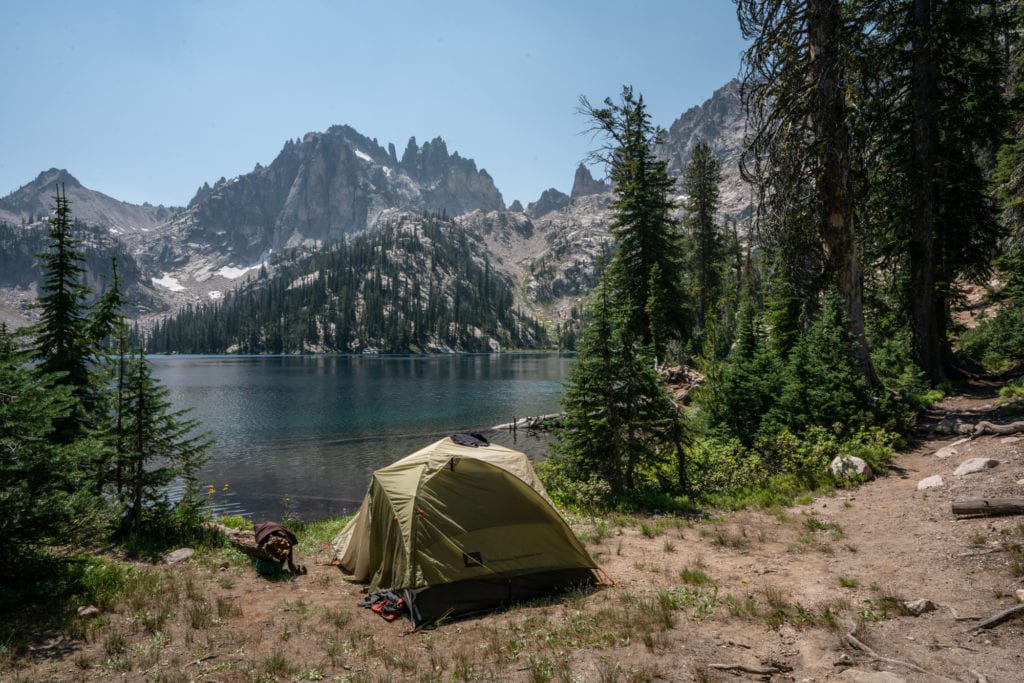
Proximity to water is the most common mistake made by novice campers. While the sound of a bubbling brook is serene, pitching too close to the bank violates essential wilderness campsite criteria. To protect fragile ecosystems and maintain backcountry etiquette, you must stay at least 200 feet away from any water source. This distance prevents human waste and gray water from contaminating the local supply and protects the riparian zones that wildlife depend on.
Furthermore, regarding backcountry camping site selection for leave no trace, staying back helps preserve the solitude of the area. Animals often visit water sources at night; if your tent is on the bank, you are blocking their access and increasing the likelihood of a midnight encounter. Also, remember that water attracts insects. Moving 200 feet inland usually provides a slight elevation gain or a breeze that keeps mosquitoes at bay.
Rule 4: Hydrological Safety — Avoiding Drainage Basins and Flash Floods
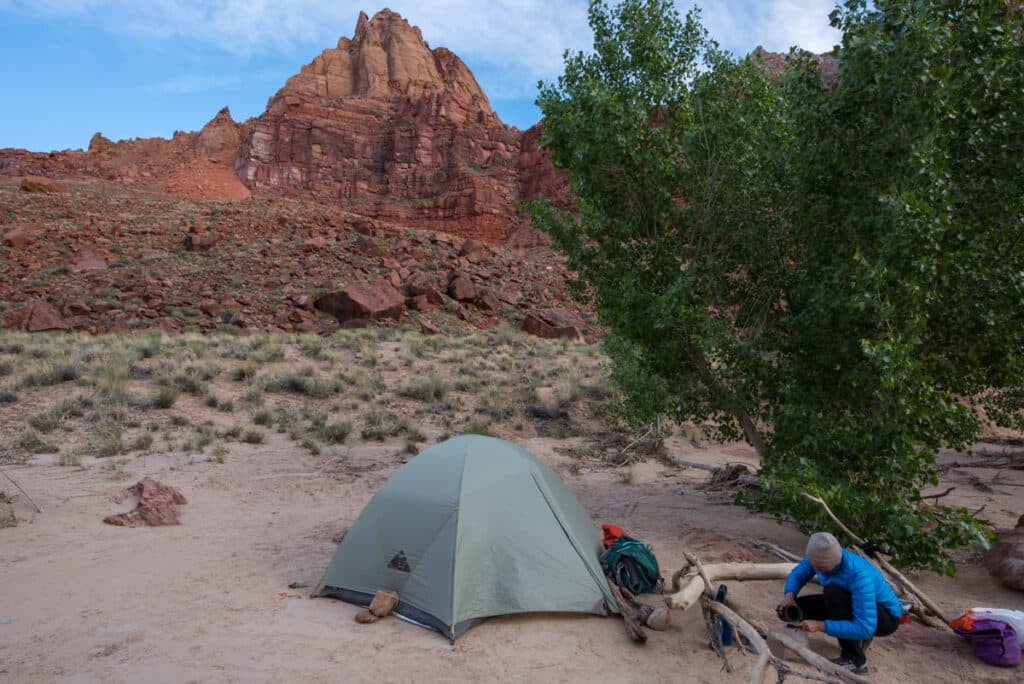
Understanding your environment means reading the history written in the landscape. Avoid drainage basins or depressions where water naturally collects. Look for physical indicators of flash flood zones, such as debris lines (twigs and leaves caught in bushes up high) or pale, water-scoured rocks in a dry wash. These are clear signs that your chosen spot is a temporary river during a storm.
Proper wilderness campsite criteria for water drainage also involve monitoring the microclimate of valley bottoms. Cold air moves like water, flowing downhill and settling in the lowest points. A valley floor can be 5 to 15 degrees colder than a bench just 50 feet higher up. To ensure a warmer night, avoid the "sinkholing" effect of canyons and basins unless you have the heavy-duty gear to handle the temperature drop.
Rule 5: Personalize Your Sun — Morning Rays vs. Deep Forest Shade
Your sleep quality depends heavily on solar exposure. There is a specific transition known as the 9:00 AM heat threshold; this is the time when a tent in direct sunlight becomes an oven. If you are an early riser who wants to hit the trail by dawn, look for an eastern exposure. This campsite orientation for morning sun vs shade allows the first rays to warm your tent and dry off any condensation from the night.
Conversely, if you prefer to sleep in, seek a spot on the western side of a ridge or under deep canopy shade. Utilizing the topography of canyon walls or dense vegetation can buy you several extra hours of cool air. Balancing your desire for warmth with the need for shade is a key part of professional campsite selection.
Rule 6: Wildlife Boundaries — Avoiding Game Trails and Food Odors
You are a guest in the wild, and you don’t want to sleep in the middle of a hallway. Avoiding game trails for bear safety at campsites is vital. Look for matted-down grass, clear paths through thickets, or animal tracks. If you pitch your tent on a trail, you are significantly increasing the chances of a "bump in the night" from a deer, elk, or bear.
Hygiene and distance also play a role in safety. When camping in established areas, consider the campsite distance from bathrooms and trash for smell. While you want convenience, being downwind of a vault toilet or a trash receptacle can attract rodents and ruin the atmosphere. Always set up your "kitchen" area at least 100 yards away from your sleeping area in a triangle formation to keep food odors from leading wildlife to your pillow.
Rule 7: Managing the Breeze — Locating Windbreaks
Wind can be your best friend or your worst enemy. During a heatwave, an exposed ridge provides a cooling breeze that acts as a natural mosquito repellent. However, for locating wind protected camping spots during storms, you need to find natural shelter. Look for large boulders, dense shrubbery, or a slight change in topography to break the force of prevailing winds.
If you anticipate high winds, check that your safe tent placement involves orienting the narrowest part of your tent into the wind to minimize the surface area. This reduces the strain on your poles and fabric. Never place your tent directly under a lone tree in an open field, as this increases lightning risk, despite the tempting wind protection the trunk might offer.
Rule 8: The Sunset Mandate — Arriving Before the 'Darkness Rush'
One of the most overlooked rules of campsite selection is timing. You should aim to arrive at your potential site at least two hours before sunset. Setting up camp in the dark leads to poor decision-making. You are more likely to miss a widowmaker overhead or overlook a drainage issue when you are working by the narrow beam of a headlamp.
Arriving early allows you to perform a thorough sweep of the area. It gives you time to test the soil, check for ants or wasps, and ensure you aren't infringing on another group’s privacy. In high-demand areas near national parks, early arrival is often the only way to secure a spot that meets all your safety and comfort criteria.
Rule 9: Legal Literacy — Navigating the 2025 EXPLORE Act
The legal landscape of camping is changing. With the implementation of the 2025 EXPLORE Act, there is a renewed focus on formalizing wilderness use across the National Park Service (NPS), Bureau of Land Management (BLM), and Forest Service. This legislation aims to streamline permitting but also enforces stricter adherence to wilderness campsite criteria to prevent overcrowding and environmental degradation.
Always check local regulations before you go. Some areas require you to camp on "durable surfaces" only, while others may mandate the use of bear canisters or specific waste disposal methods. Staying legally compliant not only protects the land but also ensures you don't end your trip with a heavy fine. Following these government guidelines is a core part of being a responsible steward of the outdoors.
Rule 10: The 10-Minute Systematic Scan
Before you pull a single stake out of your bag, perform a 10-minute systematic scan. This is a mental checklist that ensures you haven't overlooked any critical campsite safety factors. Walk the perimeter of your intended tent footprint and ask yourself four questions:
- Overhead: Are there any dead limbs or leaning trees?
- Hydrological: Am I in a potential path for water if it rains?
- Geological: Is the ground stable enough to hold my stakes?
- Biological: Am I on a game trail or near a beehive?
If the site passes all four checks, you can proceed with confidence. This systematic approach transforms campsite selection from a guessing game into a repeatable, professional skill that ensures every night spent outdoors is as safe as it is memorable.
FAQ
What are the most important factors when choosing a campsite?
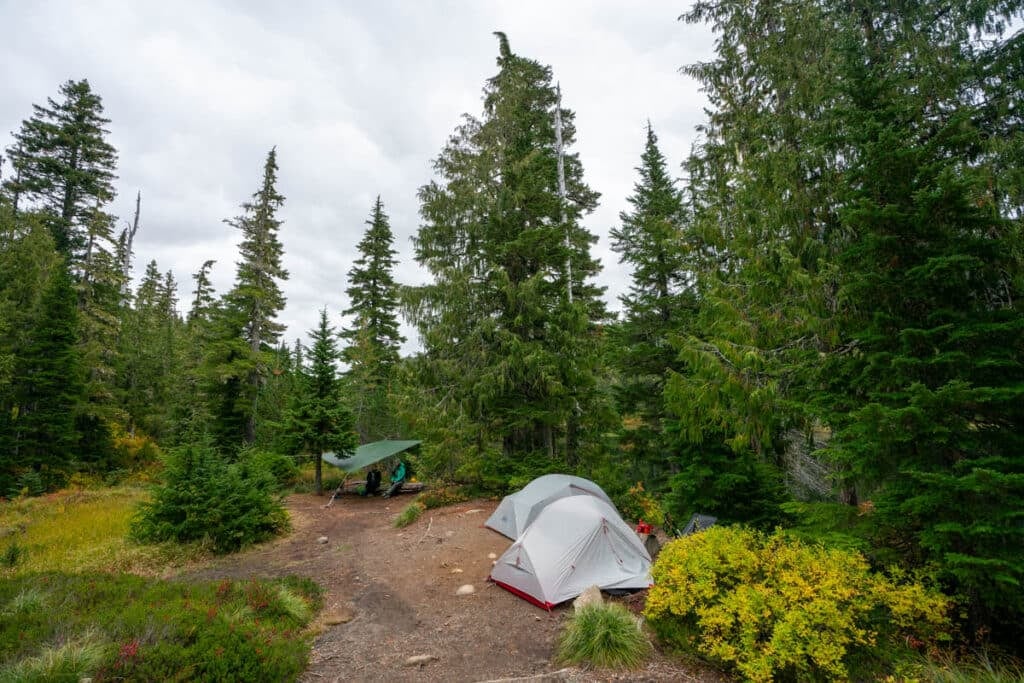
The most critical factors are safety and environmental impact. This includes checking for overhead hazards like dead branches, ensuring you are on level and durable ground, and staying at least 200 feet away from water sources. Protecting yourself from potential flooding and wind while respecting the local ecology should always be your top priorities.
How do you identify a safe location for your tent?
A safe location is one that is free from widowmakers, is not in a drainage basin or a flash flood zone, and is away from game trails. Look for a site that offers some natural wind protection and has stable soil that can hold tent stakes securely. Performing a 10-minute scan of the area before setting up is the best way to confirm safety.
What should you avoid when looking for a place to camp?
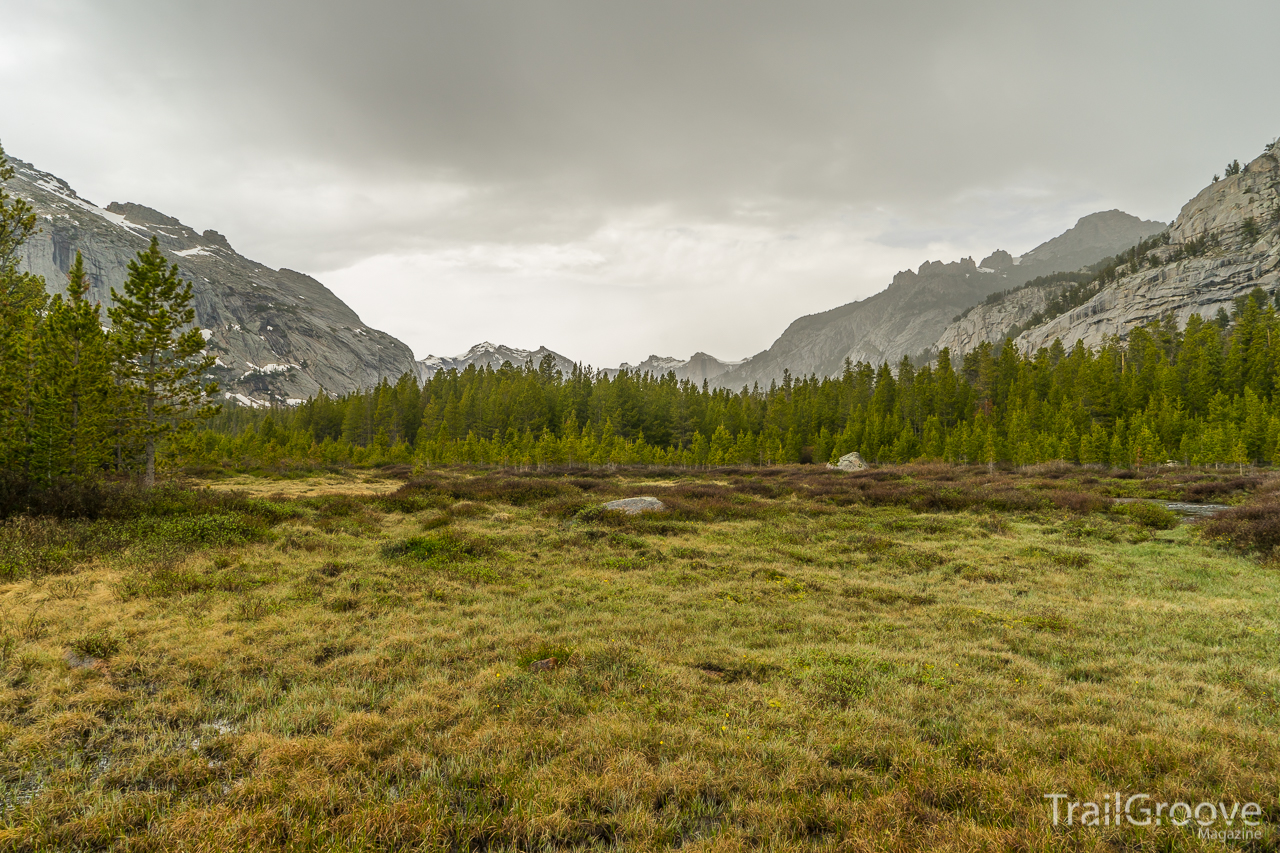
Avoid depressions where water might pool, the very bottom of valleys where cold air settles, and any area directly under tall, dead, or damaged trees. You should also stay away from game trails to avoid wildlife encounters and steer clear of fragile vegetation or meadows where your presence could cause long-term environmental damage.
How far from water should a campsite be located?
Standard wilderness ethics and government regulations require you to be at least 200 feet (about 70 adult steps) away from lakes, rivers, and streams. This distance protects water quality, allows wildlife to access the water undisturbed, and usually reduces the number of insects you will encounter.
What are the best practices for Leave No Trace campsite selection?
The best practices include choosing sites that are already impacted (established sites) rather than creating new ones. If you are in a remote area, choose a durable surface like rock, gravel, or dry grass. Always stay 200 feet from water, pack out all trash, and leave the site exactly as you found it, ensuring the next visitor can enjoy a pristine environment.