Quick Facts
- Weight Limit: Most standard European and UK driving licenses cap the vehicle at a 3.5 ton limit (3500kg) Gross Vehicle Weight Rating.
- The Hidden Drain: Fuel, water, and passengers can consume between 350 and 500 kilograms of capacity before any furniture is added.
- Top Material: Poplar plywood offers the best strength-to-weight ratio for interior cabinetry compared to heavier alternatives.
- Energy Pivot: Switching to lithium batteries saves approximately 50% mass compared to traditional lead-acid equivalents.
- The 90/10 Rule: Only permanently install amenities that you will use 90% of the time to maintain a lightweight build.
- Structural Strategy: Using aluminum extrusions allows for high structural integrity with minimal mass.
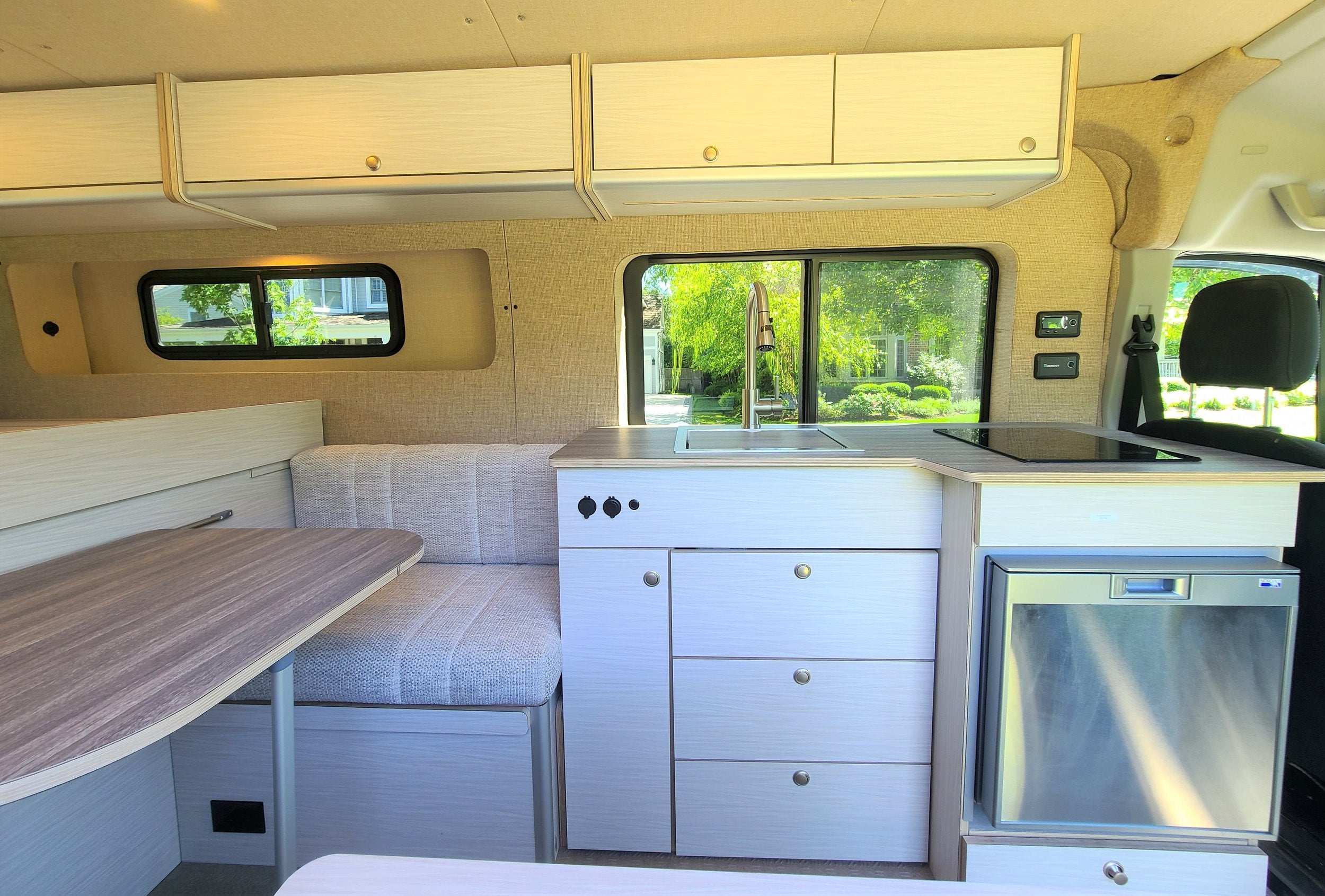
A lightweight campervan build prioritizes vehicle performance and safety by using engineered materials like aluminum and poplar plywood to stay well under the vehicle's GVWR, ensuring better fuel economy and handling. By focusing on weight distribution and modularity, builders can avoid the hazards of an overloaded chassis while maintaining a comfortable living space.
The Real Cost of Heavy Builds: Mechanics and Safety
When you first drive a brand-new, empty cargo van off the lot, it feels spritely. The acceleration is snappy, the braking is immediate, and the steering feels connected to the road. However, as the conversion progresses, many builders lose that performance, turning a nimble machine into a sluggish, potentially dangerous heavy-duty vehicle.
Excessive weight in campervan conversions compromises braking efficiency and acceleration. When a vehicle is near or over its limit, the distance required to come to a complete stop increases significantly. This is particularly dangerous on steep mountain descents where brake fade can occur due to the immense heat generated by trying to slow a heavy mass. Furthermore, heavy builds place significant stress on the chassis and suspension. Over time, this leads to premature wear on bushings, shocks, and tires, ultimately resulting in high long-term maintenance costs and a rougher ride.
Weight also dictates the vehicle's center of gravity. A high-top van with heavy overhead cabinets or a massive roof rack becomes prone to swaying in crosswinds or tipping during emergency maneuvers. A lightweight campervan build keeps the mass low and centered, ensuring that the van handles more like a car and less like a swaying boat.

Understanding the 3.5T Threshold and Payload Math
The most important acronym in van building is GVWR, or Gross Vehicle Weight Rating. This is the maximum legal weight of your vehicle, including everything—passengers, fuel, water, and even your morning coffee. In many regions, the staying under 3.5 ton campervan weight limit is critical because exceeding it can lead to heavy fines, voided insurance, or the requirement of a different license class.
According to data from the UK’s Driver and Vehicle Standards Agency (DVSA), approximately 80% of motorhomes and campervans were found to be operating over their legal weight limits during roadside inspections. This suggests that many builders fail to account for the "hidden payload" before they start adding heavy wood.
To understand how to calculate campervan payload before building, you must start with the kerb weight (the weight of the empty van with a full tank of fuel) and subtract it from the GVWR. The remaining number is your payload. However, you must account for the following essentials before you even think about cabinets:
| Item | Estimated Weight |
|---|---|
| Driver and Passenger | 150 kg - 180 kg |
| Full Fresh Water Tank (100L) | 100 kg |
| Full Fuel Tank (already in kerb weight, but check) | 0 kg |
| Recovery Gear & Tools | 20 kg - 40 kg |
| Personal Luggage & Food | 50 kg - 80 kg |
| Total Hidden Payload | 320 kg - 400 kg |
If your van has a total payload of 800kg, after accounting for these essentials, you only have about 400kg left for your floor, insulation, walls, bed, kitchen, and batteries. This is why campervan payload management is a non-negotiable part of the design process.

Material Science: Poplar Plywood vs. Traditional Wood
The choice of wood is where most kg are gained or lost. Many novice builders head to the local hardware store and buy heavy MDF or thick construction-grade pine. This is often why you should avoid heavy wood in van conversions. While these materials are cheap and accessible, they are incredibly dense and lack structural resilience in a vibrating vehicle environment.
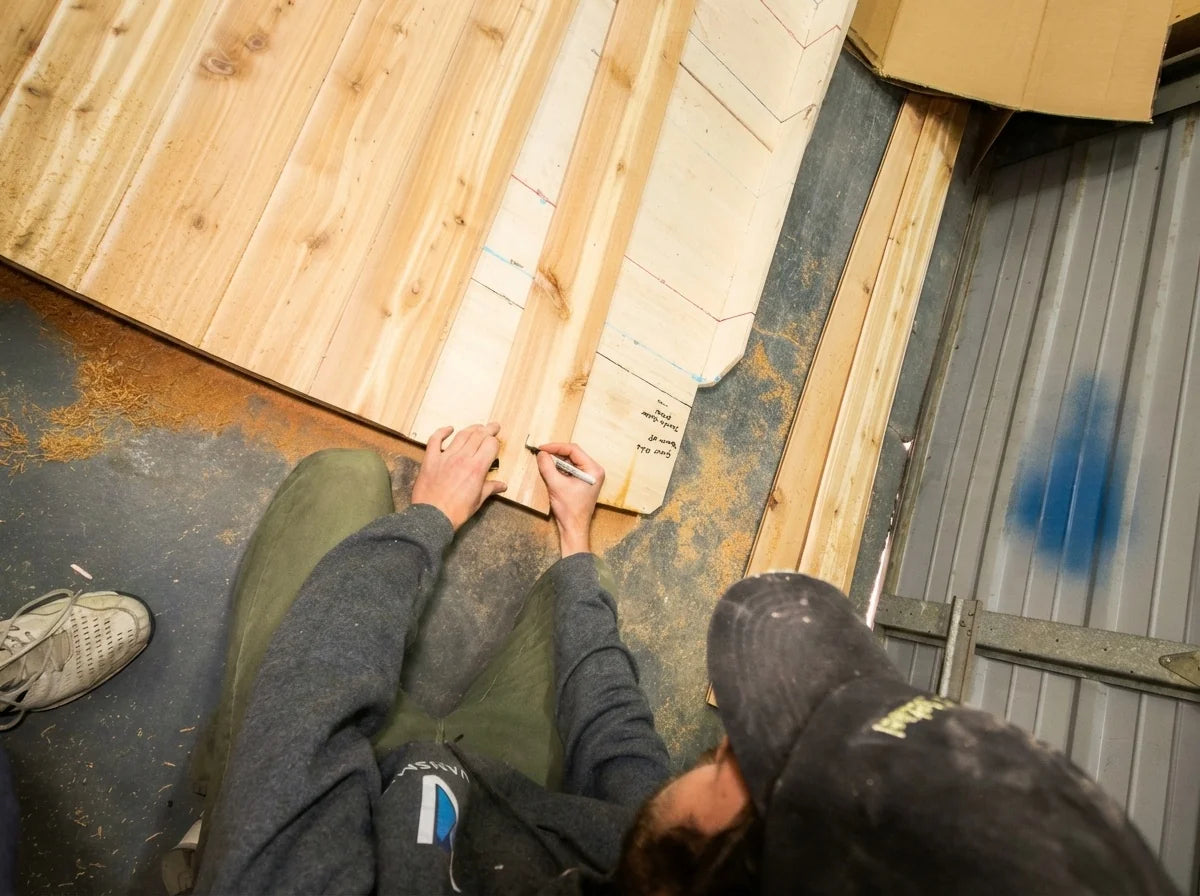
The best lightweight materials for campervan cabinets are poplar plywood and paulownia. Poplar is a staple in the professional conversion industry because it is roughly 30% lighter than standard birch plywood while maintaining excellent screw-holding strength.
Wood Weight Comparison (Per Cubic Meter)
| Material | Approx. Density (kg/m³) | Weight Status |
|---|---|---|
| MDF (Fiberboard) | 700 - 800 kg | Extremely Heavy |
| Baltic Birch Plywood | 650 - 700 kg | Moderate / Heavy |
| Pine (Solid) | 450 - 550 kg | Average |
| Poplar Plywood | 350 - 450 kg | Lightweight |
| Paulownia | 250 - 300 kg | Ultra-Lightweight |
Modern builders are also moving toward aluminum extrusions for framing. Aluminum offers incredible strength and allows for a modular campervan conversion where frames can be bolted together rather than glued and screwed. This provides a balance of flex and rigidity that wood sometimes lacks. Additionally, CNC engineering allows for "light-weighting" parts—removing material from the center of a panel where it isn't structurally necessary—further reducing the total mass of the cabinetry.
The Modular Mindset: Minimalist Layout Ideas
A common mistake in van life is trying to fit a three-bedroom house into a ten-square-meter van. This "maximalist" approach leads to heavy built-in showers, massive tile backsplashes, and complex plumbing systems. To succeed, you need to adopt minimalist van layout ideas.
The 90/10 rule is a great guide: if you don’t use something 90% of the time, it shouldn't be a permanent, heavy fixture. Instead of a fixed internal shower that adds 50kg of plumbing and fiberglass, consider a portable outdoor shower. Instead of a heavy, fixed oven, use a portable gas stove that can be stored in a drawer or used on a picnic table.
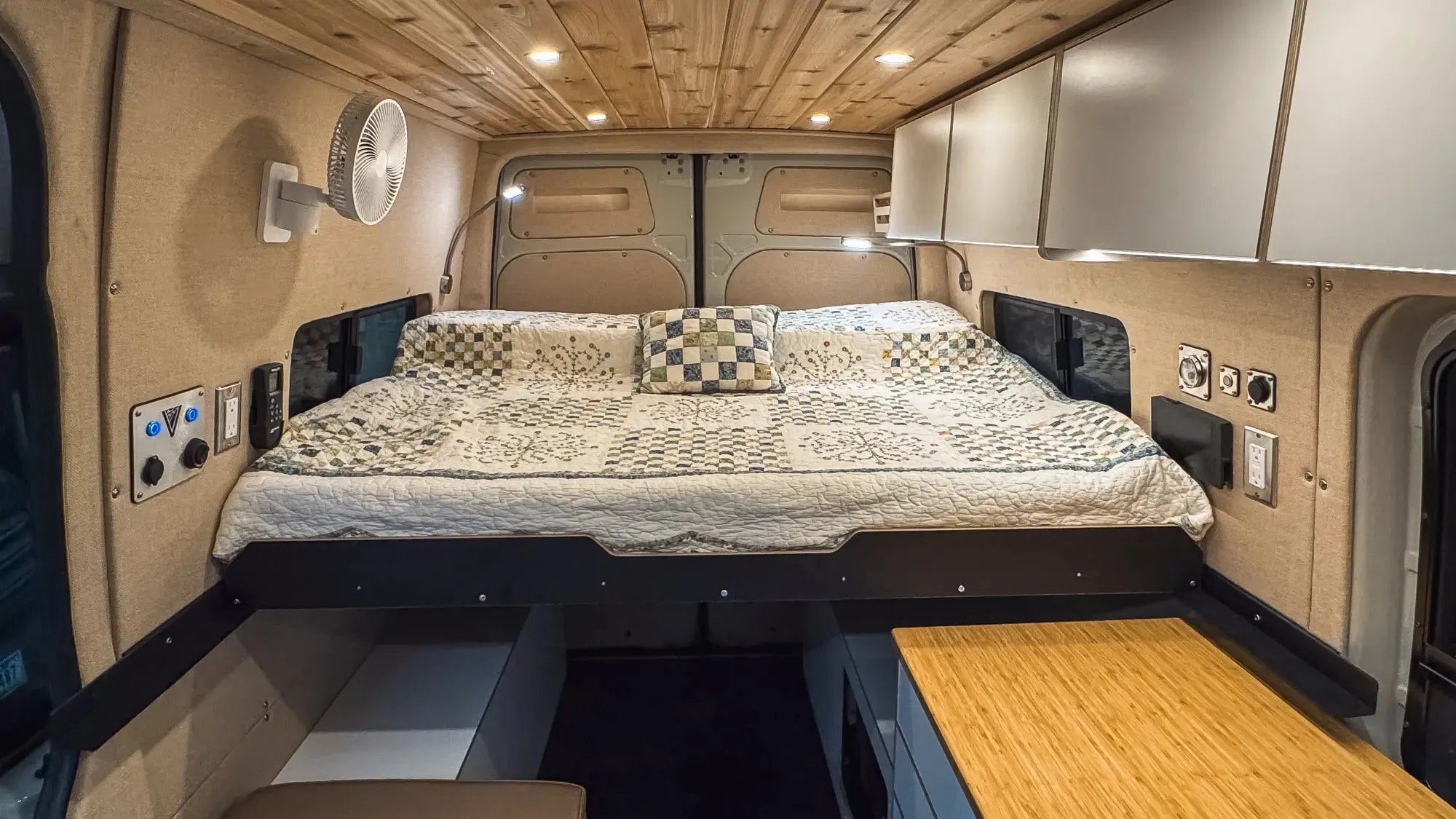
Removable modular campervan kitchen units are another excellent solution. These modules allow you to take the heavy kitchen out when you are using the van for daily chores or moving furniture. This strategy not only protects your suspension during daily drives but also allows you to customize your layout for different trips. Minimalist campervan floor plans for better fuel economy often feature open floor space and soft-sided storage (like fabric bags) instead of heavy wooden overhead bins.

Weight-Efficient Systems: Batteries and Water
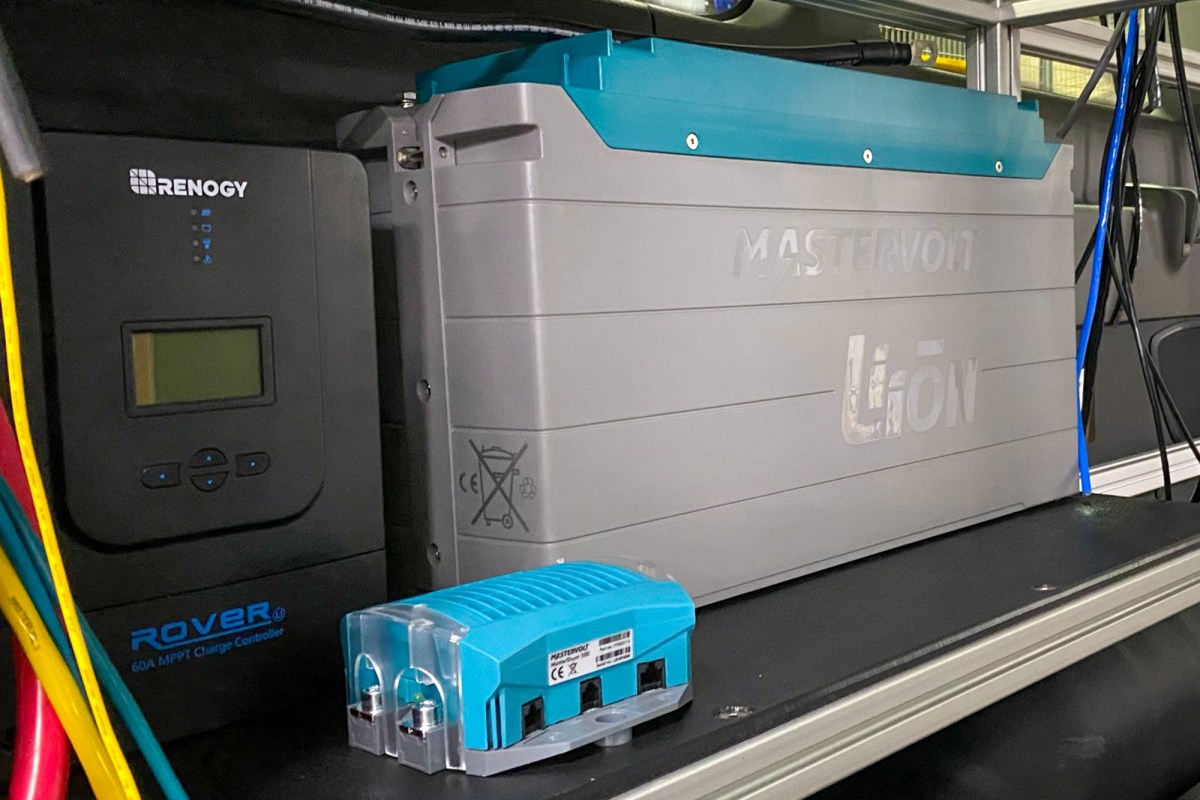
Beyond the furniture, the electrical and plumbing systems are major weight contributors. Traditional lead-acid or AGM batteries are incredibly heavy for the amount of energy they provide. A 100Ah lead-acid battery weighs about 30 kilograms, but due to depth-of-discharge limits, you can only use 50Ah of that energy.
In contrast, a 100Ah lithium battery weighs about 15 kilograms and allows you to use nearly the full 100Ah. This means you get twice the power for half the weight. This high energy density is a game-changer for anyone attempting a lightweight campervan build.
Water management is the other pillar of weight control. Every liter of water weighs exactly one kilogram. Many builders install 150-liter tanks "just in case," but they end up carrying 150kg of dead weight for weeks. A better approach is to size your tanks for 2-3 days of actual use and utilize a modular jerry-can system that is easier to clean and lighter to manage.
When installing these systems, focus on weight distribution. Heavy items like batteries and water tanks should be placed between the axles and as low to the ground as possible. This lowers the center of gravity and improves vehicle stability during cornering.
Verification: Using a Weighbridge
The final, and perhaps most critical, step in any conversion is weighbridge testing. You cannot rely on "guesstimates" when it comes to road safety. Once your build is complete, take it to a local weighbridge (often found at recycling centers or trucking stops) to get a certified weight ticket.
You should weigh the van in two ways:
- Total Weight: To ensure you are under the 3.5 ton limit for the GVWR.
- Axle Weight: To ensure the weight is distributed correctly. If the rear axle is at its limit but the front is empty, your steering will feel light and unresponsive.
Knowing your numbers gives you peace of mind. If you find you are over the limit, it’s time to look back at the 90/10 rule and decide what stays and what goes. It is better to remove a heavy cabinet in your driveway than to have it seized at a roadside inspection.
FAQ
How do you keep a van conversion under weight limits?
To keep a build under weight limits, start by calculating your available payload after passengers and fluids. Use lightweight materials like poplar plywood or aluminum extrusions, and prioritize lithium batteries over lead-acid. Avoid heavy domestic appliances and consider a modular design that allows for the removal of components when they aren't needed.
What are the best materials for a lightweight campervan build?
The most effective materials include poplar or paulownia plywood for cabinetry, aluminum extrusions for structural framing, and rigid foam board for insulation. For storage, soft-sided fabric bins are significantly lighter than wooden drawers, and lithium-ion batteries provide the best energy-to-weight ratio for power systems.
Which type of wood is lightest for van cabinets?
Paulownia is one of the lightest woods available, weighing approximately 250-300 kg/m³. However, poplar plywood is the more common "industry standard" as it strikes a better balance between light weight (approx. 400 kg/m³) and the structural strength needed to hold screws and withstand vehicle vibrations.
How much does a typical campervan conversion weigh?
A typical professional conversion for a medium-to-large van usually adds between 400kg and 800kg to the vehicle's kerb weight. However, DIY builds using heavy construction materials often exceed 1,000kg, which frequently pushes the vehicle over the 3,500kg legal limit when passengers and gear are added.
Is aluminum better than wood for a lightweight van build?
Aluminum is often better for framing because of its high strength-to-weight ratio and its ability to withstand vibration without cracking. While wood is easier for many DIYers to work with, aluminum extrusions allow for much thinner profiles and modularity, often resulting in a lighter overall structure for the same level of durability.
How does campervan weight impact fuel efficiency?
Increased weight directly increases fuel consumption because the engine must work harder to overcome inertia and rolling resistance. Specifically, heavy builds increase aerodynamic drag (if the weight leads to a higher stance) and mechanical friction. Reducing weight can significantly improve miles-per-gallon (MPG) and reduce the wear and tear on engine components and tires.