Quick Facts
- Lethal Threshold: Less than 1 percent of body weight (approx. 50 grams for a calf).
- Impact Window: Cardiac arrest occurs within 2 to 4 hours of ingestion.
- Toxic Compound: Taxine A and B alkaloids.
- Vulnerability: Elk and pronghorn have no evolutionary memory of this non-native plant.
- Safety Note: All parts (needles, bark, seeds) remain toxic even after being cut and dried.
Japanese yew toxicity poses a silent but deadly threat to wintering elk populations. Often found in residential landscapes, these ornamental shrubs contain potent Taxine alkaloids that cause rapid cardiac arrhythmia and sudden death. Foraging elk, driven by heavy snow into subdivisions, unknowingly consume this non-native plant, resulting in tragic mortality events across the mountain west. Japanese yew toxicity is caused by Taxine alkaloids that paralyze the heart’s electrical system, leading to rapid cardiac arrhythmia and heart failure in elk. Because death often occurs before physical signs manifest, identifying Japanese yew shrubs and preventing winter elk die-offs in subdivisions is critical for wildlife conservation.
The Science of Sudden Death: Cardiac Arrhythmia
When an elk consumes the needles or stems of a plant from the Taxaceae family, the biological reaction is both swift and catastrophic. The primary culprits in Japanese yew toxicity are Taxine alkaloids, specifically Taxine B. These compounds act as aggressive calcium and sodium channel antagonists. In the world of ungulate physiology, the heart relies on a precise electrical exchange of these ions to maintain a steady rhythm. When Taxine B enters the bloodstream, it disrupts this flow, effectively short-circuiting the heart's electrical conduction system.
The result is Japanese yew induced cardiac failure in elk, which typically occurs when the heart stops during the diastole, or the relaxation phase of the heartbeat. This is known as diastolic cardiac standstill. For a small elk, a lethal amount of Japanese yew translates to roughly 50 grams of leaves, or less than 1 percent of the animal's total body weight. Because the toxin is processed so quickly, the animal often dies with a mouth full of unswallowed needles.
Biologists and veterinarians performing a post-mortem necropsy often look for specific diagnostic markers to confirm the cause of death. Since the physical damage to organs might be minimal due to the speed of the toxin, researchers track a compound called 3,5-dimethoxyphenol. This chemical serves as a reliable indicator that the animal ingested Taxus cuspidata. These toxic alkaloids called taxines leave a clear chemical signature even when the physical symptoms of the struggle are absent.
The Evolutionary Gap: Why Elk Browse Toxic Shrubs
One might wonder why a majestic animal like an elk, so finely tuned to its environment, would eat something so deadly. The answer lies in a combination of winter foraging pressure and an evolutionary blind spot. Elk did not evolve alongside the Japanese yew, which is native to East Asia. Consequently, they lack the genetic memory or learned behavior to recognize it as a hazard. To an elk used to browsing on native hemlock or cedar, the evergreen needles of the yew look like a high-protein winter snack.
This problem is exacerbated by habitat compression. As heavy snow blankets the high country, elk are forced into lower elevations to find food. Residential subdivisions often sit on traditional wintering grounds. In these areas, ornamental shrubs are meticulously maintained, often remaining green and accessible even when native forage is buried under three feet of snow. During the 2016–2017 winter season, Japanese yew ingestion was responsible for the deaths of at least 23 elk and 50 pronghorn in residential areas throughout Idaho.
Interestingly, there is a stark difference in how various species handle the toxin. While whitetail deer appear to have a higher tolerance—likely due to different liver enzyme pathways or rumen microbes—elk and pronghorn are extremely sensitive. When elk winter foraging habits in residential areas bring them into contact with these landscapes, the results are almost always fatal. This lack of resistance makes preventing winter elk die-offs in subdivisions a top priority for wildlife managers in the intermountain west.
Identification Guide: Distinguishing Japanese Yew from Local Evergreens
For homeowners, the first step in preventing winter elk die-offs is learning to identify Japanese yew shrubs on their property. These plants are ubiquitous in landscaping because they are hardy, shade-tolerant, and easy to prune into hedges. However, their physical characteristics can be subtle if you aren't sure what to look for.
Needle Arrangement and Texture
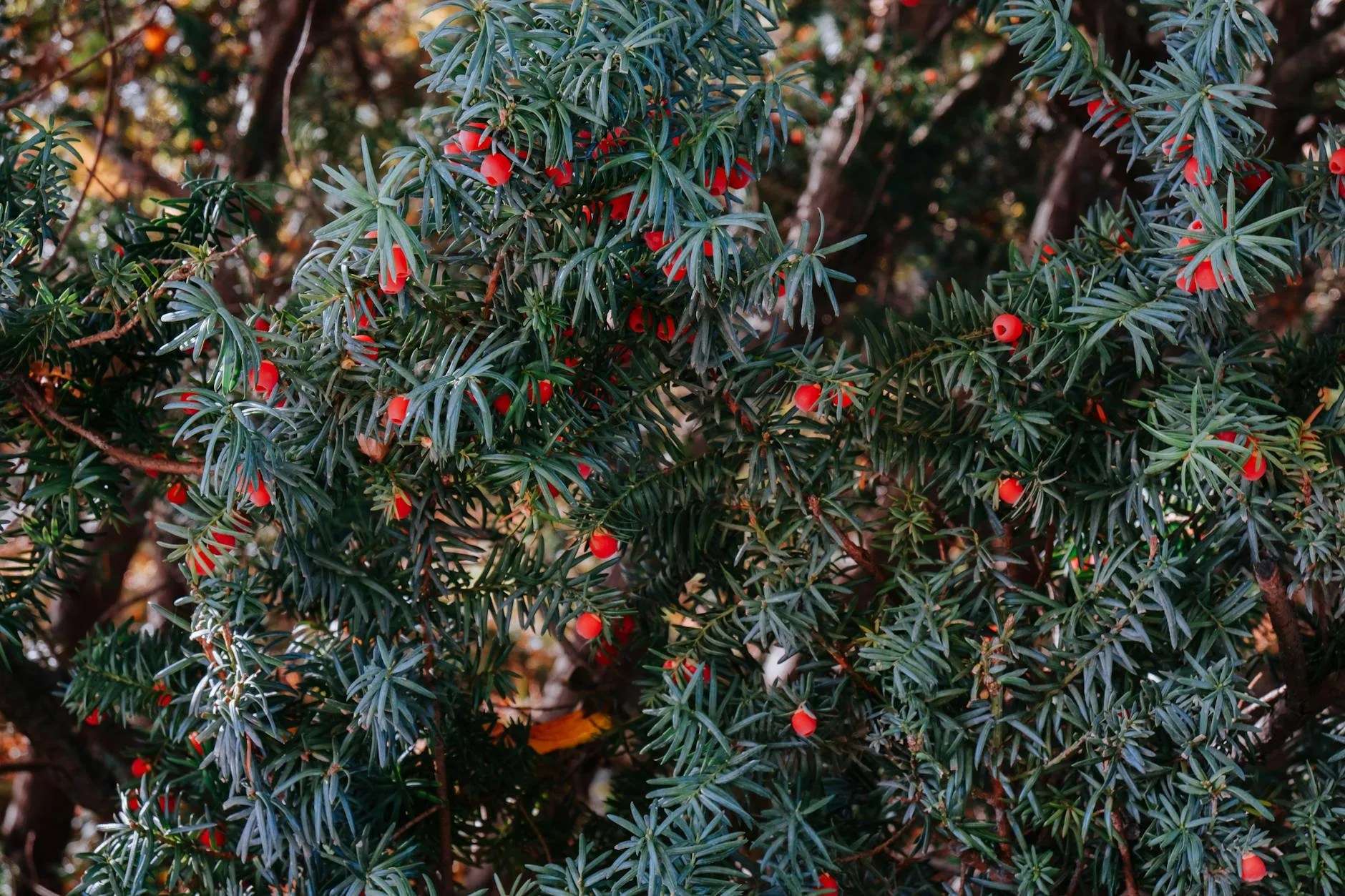
Unlike pines or spruces where needles are often grouped in bundles or are stiff and prickly, Japanese yew has flat, soft needles. These needles are dark green on top and a slightly paler green underneath. A key identifier is the way the needles grow: they appear to be in two flat rows, but they actually spiral around the stem. If you look closely at the underside, you will not see the distinct white stomatal bands (lines) that are common on hemlocks or firs.
Bark and Berries
The bark of a mature Japanese yew is quite distinct, often appearing scaly and reddish-brown. On older plants, the bark may peel off in thin flakes. During the late summer and fall, female plants produce a bright red, fleshy fruit called an aril. While the red flesh itself is the only non-toxic part of the plant, the hard seed inside is highly concentrated with Taxine alkaloids and is extremely dangerous if chewed or crushed.
Male Flowers and Buds
If you examine the plant in early winter, you might see small, round buds that look like tiny Brussels sprouts nestled among the needles. These are the male flower buds. They are a helpful indicator for distinguishing Japanese yew from local evergreens like the Rocky Mountain Juniper, which has scale-like leaves rather than flat needles.
Warning Signs: Recognizing Elk Poisoning Symptoms
In many wildlife mortality events involving yew, there are no symptoms to observe. The speed of the cardiac arrest means the animal simply collapses. However, if an elk has consumed a sub-lethal dose or is in the early stages of toxicity, a few clinical signs may emerge.
The typical clinical progression involves:
- Muscular tremors and shaking.
- Dyspnea, or severe labored breathing.
- Dilated pupils and a confused or disoriented appearance.
- Sudden collapse followed by a lack of pulse.
If you happen to see an elk or any other animal showing these elk poisoning symptoms after browsing in a residential area, it is a veterinary emergency. While there is no specific antidote for Taxine poisoning, supportive care can sometimes be attempted in domestic animals. For wildlife, the window for intervention is almost always too short. If you find a carcass or a struggling animal, contact your local fish and game department immediately. For domestic pet concerns involving yew, the ASPCA Poison Control hotline is 888-426-4435.
Homeowner Response: Safe Disposal and Native Alternatives
If you discover that your landscaping includes these toxic plants, the most responsible action is complete removal. Simply pruning the bushes is not enough; in fact, it can make the situation worse. Cut branches and wilted clippings are just as toxic as the living plant, and abandoned brush piles are a common cause of livestock and wildlife poisoning.
When you decide to act, follow the protocol for how to safely dispose of toxic Japanese yew. This involves digging up the entire root ball to ensure the plant does not regrow. All debris should be bagged and taken to a landfill or burned. Never compost yew clippings, as the toxins are incredibly stable and can persist in the soil or compost pile for a significant amount of time.
To maintain your home's curb appeal while supporting local wildlife, consider replacing the yew with non-toxic, native evergreen and deciduous alternatives. These plants provide winter interest and cover for birds without being a death sentence for wandering herds.
| Native Alternative | Benefits | Growth Habit |
|---|---|---|
| Rocky Mountain Juniper | Extremely hardy, provides blue berries for birds | Upright, evergreen |
| Serviceberry | Beautiful spring flowers and edible summer fruit | Shrub or small tree |
| Chokecherry | Native forage that elk can safely browse | Multistemmed shrub |
| Woods' Rose | Provides winter hips and dense cover | Spreading shrub |
If immediate removal isn't possible, you must secure the plants. Wrap the shrubs tightly in heavy-duty burlap or install sturdy snow fencing that is at least six feet high. This prevents elk from reaching the foliage during the critical winter months when they are most likely to wander into your yard in search of food.
FAQ
Which parts of the Japanese yew plant are toxic?
Nearly every part of the plant is highly toxic. This includes the needles, the stems, the bark, and the seeds. The only part of the plant that does not contain the deadly Taxine alkaloids is the red, fleshy part of the berry (the aril). However, since the toxic seed is located inside the berry, the entire fruit should be considered life-threatening if consumed.
Is the Japanese yew tree poisonous to livestock?
Yes, it is exceptionally dangerous to horses, cattle, sheep, and goats. In domestic animals, yew is often called the graveyard tree because of its historical presence in cemeteries where wandering livestock would graze and die suddenly. Horses are particularly sensitive; even a small amount of fence-line browsing can lead to heart failure within minutes.
Is there a treatment for Japanese yew poisoning?
There is no specific chemical antidote for the toxins found in the Japanese yew. In some cases involving domestic pets or livestock, a veterinarian might attempt to use activated charcoal to prevent further absorption or administer atropine to manage the heart rate. However, because the toxin acts so quickly on the heart's electrical system, treatment is rarely successful.
How long does it take for Japanese yew poisoning to show symptoms?
Symptoms can appear as quickly as 30 minutes to an hour after ingestion, but death often occurs within 2 to 4 hours. In many cases involving elk and deer, there are no observable symptoms at all; the animal is found dead with the plant material still in its rumen, as the heart stops before the digestive process is even well underway.
What happens if a horse eats Japanese yew?
A horse that eats Japanese yew will usually suffer from rapid cardiac arrhythmia and sudden collapse. Because horses have a high metabolic rate and a sensitive cardiovascular system, the lethal dose is remarkably small. Death is typically so fast that the horse may still have leaves in its mouth when it is found.