Our Top Picks
- Ruffwear Roamer (Best Overall): The gold standard for versatility, featuring a padded waist belt and high-quality Wavelength webbing.
- Non-stop Dogwear Bungee Leash (Best for Performance): Designed for high-intensity canicross and trail running with professional-grade shock absorption.
- Tuff Mutt (Best Value): A durable, budget-friendly option with dual handles and reflective stitching for everyday safety.
- Ruffwear Hitch Hiker (Best for Adventure): A climbing-inspired adjustable system that transitions seamlessly from hands-free to hitching.
Hands-free dog leashes allow owners to walk, run, or hike while keeping their hands available for management tasks like holding treats, pushing a stroller, or using trekking poles. These systems typically utilize a waist belt or cross-body strap to distribute pulling force across the handler’s core, which improves stability and comfort during high-intensity activities like canicross or trail running. For 2026, top-rated hands-free dog leashes include the Ruffwear Roamer for its versatile padded waist belt and the Non-stop Dogwear Bungee Leash for its high-performance shock absorption during running. Owners looking for an affordable yet durable option often prefer the Tuff Mutt, while those needing extra freedom for their dogs might choose a hands-free retractable system like the Ruffwear Hitch Hiker.
When selecting a hands-free dog leash, look for features such as shock-absorbing bungee sections to mitigate impact from sudden pulls and integrated traffic handles for close control in crowded areas. Essential safety and durability components include reinforced stitching, adjustable waist circumferences for a secure fit, and reflective elements to ensure visibility during night walks or low-light trail sessions.
The Evolution of the Hands-Free Walk
Hands-free dog leashes have revolutionized how pet parents experience the outdoors. Whether you need a bungee dog leash for running or a cross body dog leash for casual errands, these systems offer unparalleled freedom. For 2026, top-rated options include the Ruffwear Roamer for versatility and the Non-stop Dogwear Bungee for high-performance canicross. We have spent hundreds of miles testing these systems in diverse environments, from congested urban sidewalks to technical mountain trails, to determine which designs truly stand up to the rigors of modern dog ownership.
The shift toward hands-free systems is more than a trend; it is a response to the growing active lifestyle of pet owners worldwide. In 2023, over 15 million hands-free dog leashes were sold globally, representing a substantial increase in adoption compared to 2020 as owners seek convenience for active lifestyles. This surge is reflected in the logistics of the pet industry, where the global market for dog collars, leashes, and harnesses is projected to reach a valuation of approximately US$ 6.8 billion by 2026.
| Feature | Ruffwear Roamer | Non-stop Dogwear Bungee | Tuff Mutt |
|---|---|---|---|
| Primary Use | All-around / Hiking | High-Intensity Running | Casual Runs / Budget |
| Hardware | Talon Clip (Swiveling) | Twist-lock Carabiner | Stainless Steel Clips |
| Waist Fit | 24 - 48 inches | Adjustable Universal | 26 - 48 inches |
| Tensile Strength | High (Climbing Grade) | Extreme (Competition) | Medium-High |
Safety First: Who Should (and Shouldn’t) Go Hands-Free?
While a hands-free dog leash offers incredible ergonomic benefits, it is not a universal solution for every dog-and-human duo. As editors and gear testers, we maintain that safety is the paramount consideration. The core physics of a waist belt dog leash involves transferring the dog’s kinetic energy directly to your center of gravity. For a well-trained dog that stays by your side, this is a dream. For others, it can be a hazard.
We generally advise against hands-free systems for reactive dogs or those prone to sudden, powerful lunges. If your dog sees a squirrel and hits the end of the leash with force, that energy is transferred directly to your lower back or hips. If you have a history of spinal issues or balance problems, this sudden jerk could lead to injury. Similarly, if you are walking a very large dog that outweighs you or approaches your weight, the risk of being pulled off your feet increases significantly.
High-density urban areas also require a specific setup. We look for leashes that include a built-in traffic control loop. This allows you to quickly grab the lead near the dog’s collar for immediate restraint when crossing streets or passing other pedestrians. Furthermore, ensuring your equipment has shock-absorbing elasticity is vital. This feature acts as a buffer, protecting both your dog's neck and your own joints from the micro-traumas of repetitive pulling.
Hardware and Material Guide: What Makes a Leash '2026 Grade'?
When we evaluate the durability of a hands-free dog leash, we look far beyond the color and pattern. The materials used in 2026 for high-end gear are borrowed directly from the climbing and tactical industries. Professional-grade nylon webbing durability is the baseline, but we are seeing more brands move toward Biothane or specialized coated webbing.
- Tensile Strength: Top-tier leashes are often rated for 750 lbs to 1,000 lbs of pull force.
- The Carabiner: Look for a climbing-grade carabiner with a locking mechanism. Standard trigger snaps can fail under the pressure of a heavy dog's lunge.
- The Buckle: A quick-release buckle on the waist belt is essential. In an emergency, such as your dog getting tangled or a situation where you need to detach quickly, you don’t want to be fumbling with a difficult latch.
- Weatherproof Coating: For those who hike in the rain or snow, a weatherproof coating prevents the leash from becoming heavy, water-logged, and prone to mildew.
Industry data indicates that over 60% of hands-free leashes sold worldwide in 2023 featured padded waist belts and shock-absorbing bungee cords to reduce physical strain on the owner’s body. This focus on ergonomics highlights a shift toward pet gear that prioritizes the long-term health of the human handler as much as the comfort of the dog.
Best for Runners: Top Bungee Systems
Running with a dog requires gear that manages the "arm pump" and keeps your stride natural. The best bungee dog leash for running 2026 models focus heavily on spinal health. When you are at a full sprint, the dog's pace will naturally fluctuate. A high-tensile bungee section absorbs these changes so you don't feel a constant tugging on your lumbar region.
For those interested in canicross—a sport where the dog pulls the runner—the Non-stop Dogwear Bungee Leash is unrivaled. It provides exceptional load distribution. We tested this on hilly terrain and found that the bungee offered just enough resistance to keep the line taut without snapping back too hard.
When shopping, pay close attention to the waist circumference adjustment range. A good waist belt dog leash should fit snugly just above the hips to ensure the force is distributed across the core. If the belt is too loose, it will bounce and chafe during a run. Look for adjustment ranges typically spanning 26 to 49 inches to accommodate different body types and seasonal clothing layers.
Best for Hiking and Utility: Large Dogs and Strollers
Hiking requires a different set of features than urban running. When navigating steep descents or rocky terrain with a large dog, you need stability. A waist belt dog leash for hiking with large dogs should be wide and ideally padded to prevent the belt from digging into your skin. We found that the Ruffwear Roamer’s Wavelength webbing acts like a suspension system for your dog, which is invaluable when you are using trekking poles and cannot afford a sudden shift in balance.
For parents, a hands free dog leash for pushing a stroller is a game-changer. Maintaining control of a stroller with one hand while holding a leash with the other is physically demanding and potentially unsafe. Using a cross body dog leash or a waist system keeps both hands on the stroller handle, providing much better steering and brake control.
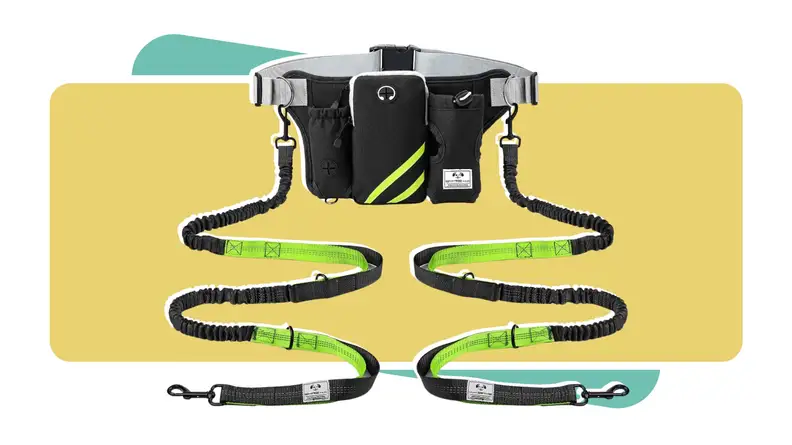
We have also found that a cross body dog leash for casual walks and errands is the most comfortable configuration for all-day wear. It fits like a messenger bag strap, distributing the weight across your shoulder and torso. This setup is particularly useful for light hiking or trips to the farmer's market where you need to reach for your wallet or carry bags without letting go of your dog.
Night Safety and Budget Options
You don't always need to spend a fortune to get high-quality gear. There are several brands offering the best affordable hands free dog leash under $30 that still maintain high safety standards. The Tuff Mutt system, for example, provides a reliable bungee and dual handles at a fraction of the cost of boutique brands. While the padding might be lighter, the nylon webbing durability remains sufficient for medium to large dogs.
Visibility is another critical factor. A reflective hands-free waist leash for night walking should feature 360-degree reflective safety stitching. In low-light trail sessions or evening city walks, this makes you and your dog visible to motorists and cyclists. We prioritize leashes where the reflective thread is woven directly into the webbing rather than printed on, as printed versions tend to peel and fade over time.
When choosing a budget option, inspect the stitching at the stress points—the areas where the leash connects to the belt and the carabiner. Look for "box-X" stitching patterns, which provide the highest level of reinforcement for affordable gear.
FAQ
Are hands-free dog leashes safe?
When used with a dog that has basic leash manners and a handler who is physically capable, they are very safe. They improve the handler's center of gravity and keep hands free for balance or other tasks. However, they can be unsafe for reactive dogs or handlers with significant back or balance issues, as a sudden pull can cause a fall or strain.
Are hands-free leashes good for running with a dog?
Yes, they are specifically designed to improve the running experience. By using a waist belt dog leash, you can maintain a natural running form and arm swing. The integrated bungee sections in many models help absorb the shock of pace changes, protecting both the runner's back and the dog's neck.
Are hands-free leashes suitable for large dogs?
They can be, but you must choose a heavy-duty system. Look for features like a climbing-grade carabiner and wide, padded waist belts to distribute the pull force. It is also important that the dog is trained not to lunge, as a large dog can exert enough force to pull a handler off balance regardless of the leash type.
Can using a waist leash hurt your back?
If your dog is a constant puller or lunges frequently, a waist leash can put repetitive strain on your lumbar spine. However, for most owners, the load distribution of a waist belt is actually more ergonomic than holding a leash in one hand, which often leads to shoulder and neck tension.
Are hands-free leashes safe for reactive dogs?
Generally, we do not recommend them for highly reactive dogs. The lack of immediate, tactile "hand-to-leash" connection can make it harder to communicate corrections or steer a reactive dog away from a trigger. If you must use one, ensure it has a sturdy traffic control loop for close-counter management.