Our Top Picks
- Best Overall for Mountains: MSR Lightning Ascent - Unbeatable 360-degree traction for technical backcountry snowshoes and steep terrain.
- Best for Deep Powder: Tubbs Mountaineer - High flotation capacity with a wide frame design tailored for off-trail navigation in soft snow.
- Best for Budget Beginners: Retrospec Drifter - Exceptional frame durability and easy-to-use bindings for those starting on groomed trails.
- Best for Natural Gait: Crescent Moon EVA - A unique rocker shape made from dual-density foam that offers superior weight distribution and comfort.
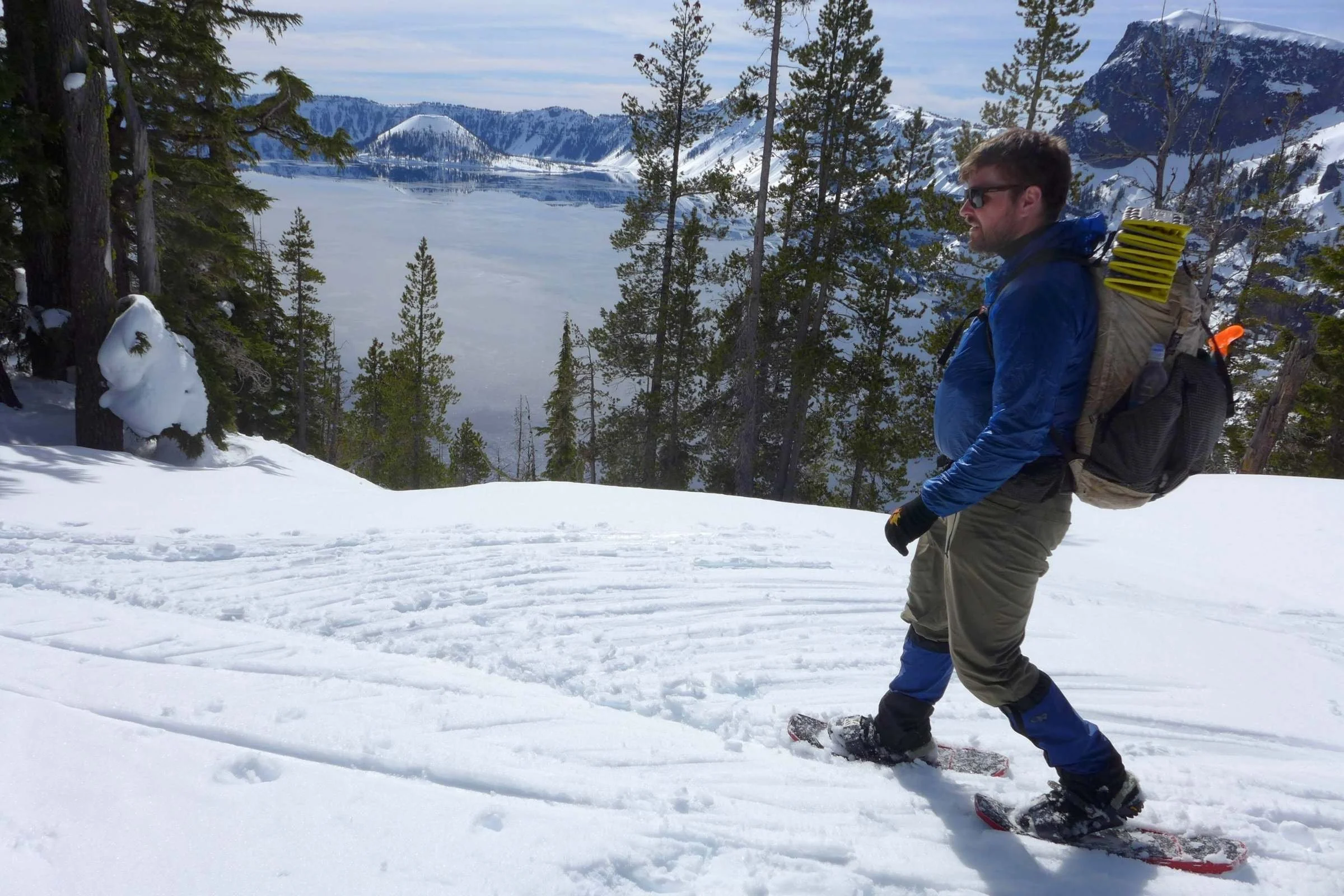
The best snowshoes for technical backcountry and steep terrain are the MSR Lightning Ascent models, which feature aggressive aluminum frames and steel crampons for maximum grip. For deep powder, the Tubbs Mountaineer provides superior flotation due to its wide forefoot and traditional tennis-racket shape. Budget-conscious beginners should consider the Retrospec Drifter, while the MSR Evo Trail is highly recommended for its long-term durability on rugged, multi-use trails.
Testing by the Numbers
| Model | Weight (Pair) | Primary Terrain | Traction Rating |
|---|---|---|---|
| MSR Lightning Ascent | 4 lbs 5 oz | Steep Backcountry | 10/10 |
| Tubbs Mountaineer | 5 lbs 2 oz | Deep Powder | 8/10 |
| Retrospec Drifter | 4 lbs 11 oz | Flat/Rolling Trails | 5/10 |
| Atlas Helium MT | 3 lbs 3 oz | All-Mountain | 7/10 |
| MSR Evo Trail | 3 lbs 10 oz | Rugged Trails/Ice | 8/10 |
| Crescent Moon EVA | 3 lbs 11 oz | Rolling Hills | 4/10 |
| TSL Symbioz Elite | 4 lbs 10 oz | Mixed Terrain | 9/10 |
Snowshoeing participation in the United States increased by 5.7% during the 2024-2025 winter season, outpacing traditional alpine sports which saw modest declines. This surge reflects a broader trend in the industry; outdoor recreation participation in the United States reached an all-time high of 183.2 million people in 2025, with 59% of Americans aged six and older engaging in outdoor activities. To help you find the right equipment to join this growing movement, we tested the 7 best snowshoes of 2026 across 200 miles of rugged terrain to see which gear truly stands up to the elements.
1. MSR Lightning Ascent: Best for Steep Backcountry
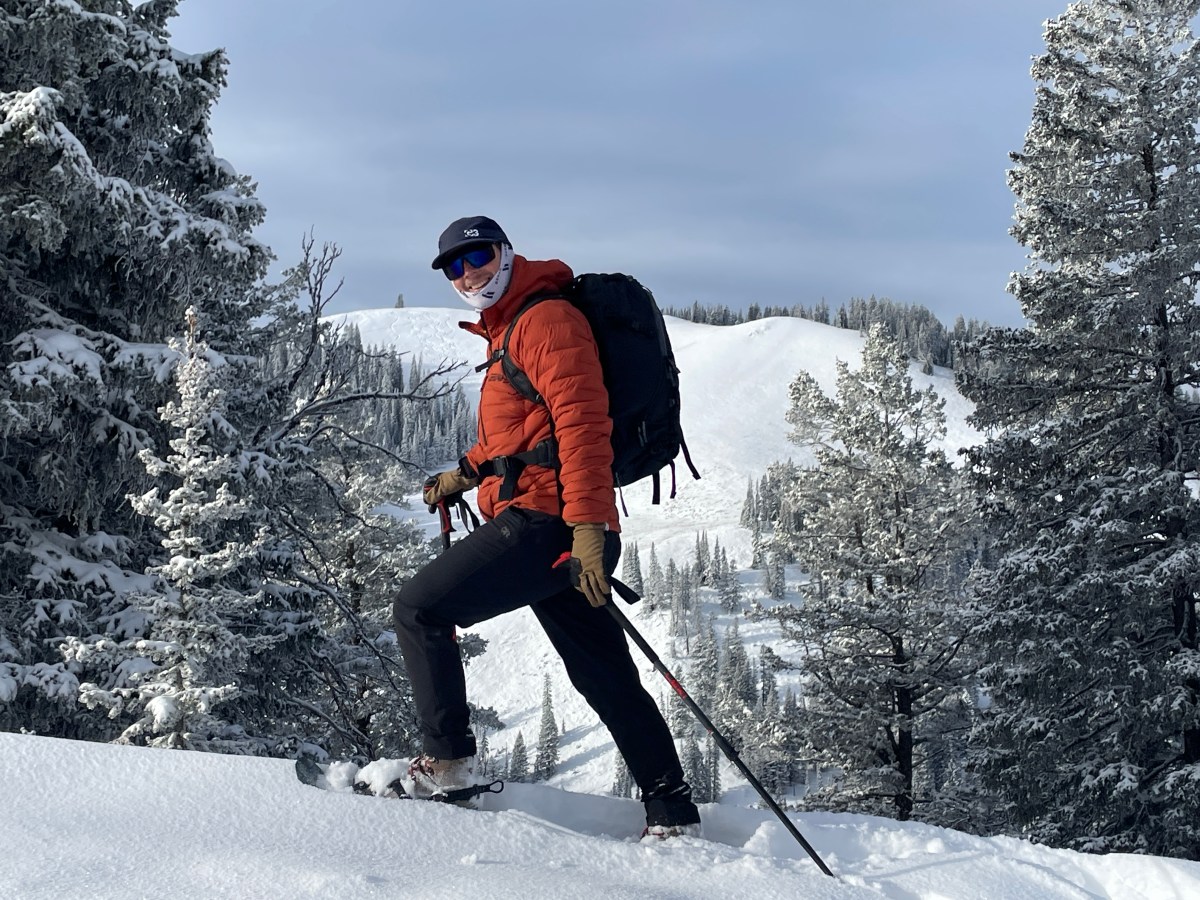
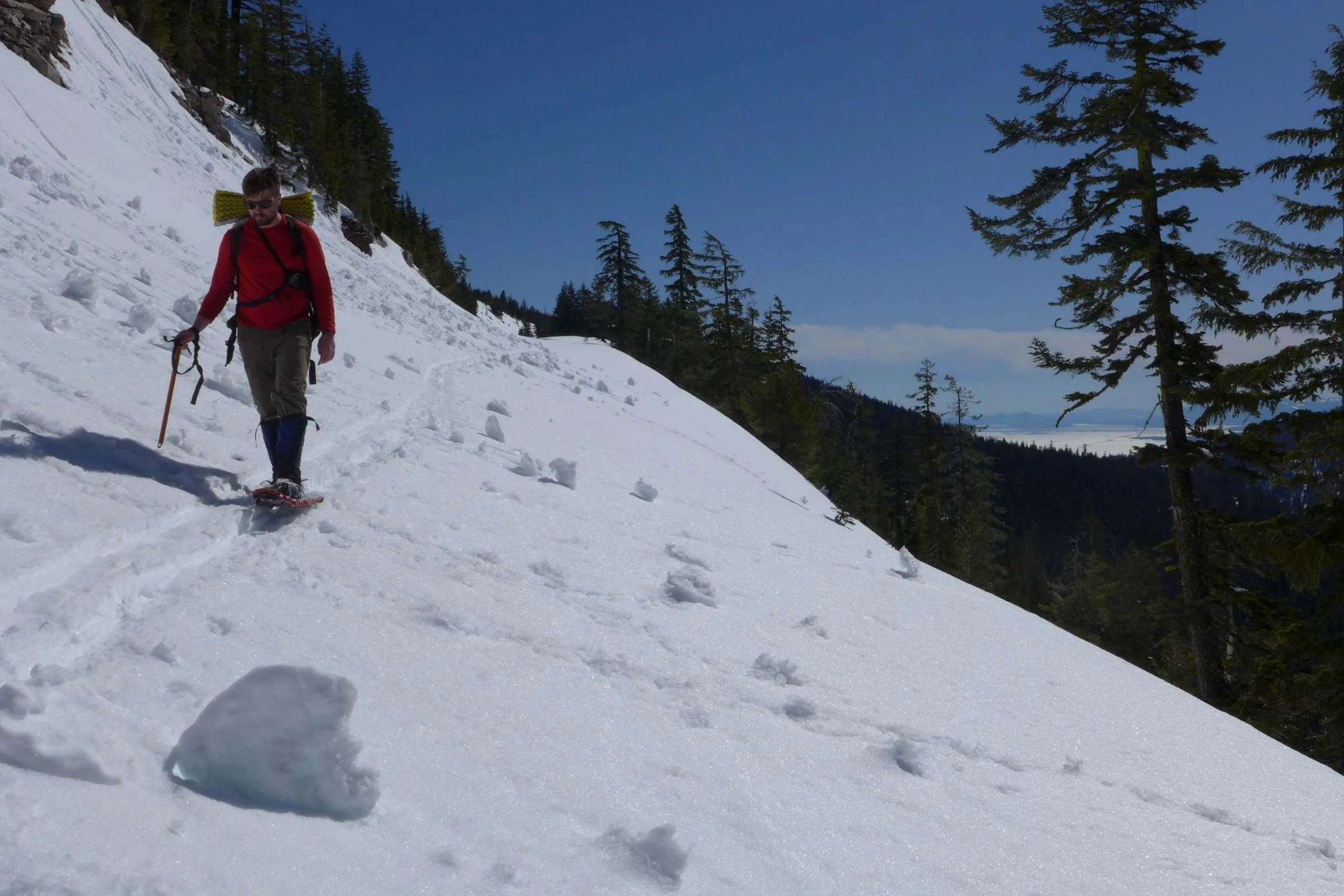
When the terrain turns vertical and the snow turns to bulletproof ice, the MSR Lightning Ascent remains the gold standard for technical backcountry snowshoes for steep mountain terrain. Unlike traditional designs that rely solely on a center crampon, the Lightning Ascent features high-grade Aluminum side rails that offer 360-degree grip. During our testing in the North Cascades, these rails allowed us to traverse side-slopes that would have seen other models sliding downhill.
The 2026 iteration continues to use the Paragon binding, a mesh-style wrap that eliminates pressure points while securing the boot firmly. This is crucial for long days where foot fatigue can end a trip early. Furthermore, the inclusion of Ergo Televator climbing wires makes a significant difference during sustained ascents. By flipping these bars up under your heels, you reduce calf strain, essentially turning steep mountain faces into a flight of stairs. While the retail price sits around $390, the security provided by the steel toe crampons and the ruggedness of the frame make it a mandatory investment for serious peak baggers.
Pros:
- Maximum traction on ice and crusty snow.
- Paragon bindings are freeze-resistant and highly adjustable.
- Extremely lightweight for the level of performance offered.
Cons:
- Higher price point than recreational models.
- Aluminum frame can be noisier on hardpack snow.
2. Tubbs Mountaineer: Best for Deep Powder Flotation
For adventurers heading into the untracked wilderness of the Rockies or the Sierras, the best snowshoes for deep powder flotation are the Tubbs Mountaineer. These shoes are engineered with a wide forefoot and a classic aesthetic that maximizes surface area. In our deep-snow testing, the Mountaineer consistently sat higher in the water column of the snowpack than its narrower competitors.
The flotation capacity of these shoes is achieved through the Pro-Step frame, which features a continuous curve that reduces impact on joints while maintaining lift. When you are looking for off-trail navigation, you need a shoe that doesn't just keep you up but also helps you move forward with minimal drag. The R2 Revolution Response pivot system allows the tail of the snowshoe to drop, shedding snow effectively with every step.
Pros:
- Excellent lift in light, fluffy powder.
- Robust crampon system for mid-trail icy patches.
- Available in larger sizes for heavy loads.
Cons:
- Bulky design can be cumbersome in tight brush.
- Heavier than technical mountain models.
3. Retrospec Drifter: Best Budget Option for Beginners
If you are looking for the best budget snowshoes for beginners 2026, the Retrospec Drifter dominates the entry-level market. Priced significantly lower than professional-grade gear, these shoes provide everything a casual walker needs for local parks and groomed trails. The frame durability is surprisingly high, utilizing a 6061-T6 aluminum alloy that resists bending even when you encounter hidden rocks or roots.
The Drifter uses a simple ratchet-style binding system, which will feel familiar to anyone who has ever used a snowboard. While it doesn't offer the same nuanced fit as a BOA system, it is quick to get on and off. For those who aren't planning to tackle 4,000-foot peaks but want a reliable way to get outside in January, this model provides the best value-to-performance ratio currently available.
Pros:
- Very affordable for families or casual users.
- Includes a carrying bag and trekking poles in many kits.
- Simple, intuitive binding system.
Cons:
- Traction is insufficient for steep icy slopes.
- Plastic decking is louder than composite or fabric alternatives.
4. Atlas Helium MT: Best Ultralight Performance
The Atlas Helium MT is the evolution of flexible frame snowshoes for uneven terrain. Weighing in at just 3 lbs 3 oz for the pair, it is the lightest technical shoe in our lineup. The secret lies in the Helium deck—a composite material that isn't just light, but also flexible. As you walk over logs, rocks, or frozen ruts, the deck twists and molds to the ground, providing more surface contact than a rigid frame would.
This snowshoe pivot efficiency is what sets it apart. The spring-loaded suspension keeps the shoe close to your foot, allowing for a more natural stride and better maneuverability. We found these were particularly effective in the Northeast, where trails are often a mix of ice, slush, and exposed granite. The wrap-around traction rails also provide a surprising amount of bite for such a lightweight package.
Pros:
- Incredibly lightweight for long-distance efforts.
- Flexible deck reduces fatigue on uneven ground.
- Easy-to-clean design prevents snow buildup.
Cons:
- The minimalist bindings may not fit very large, bulky boots.
- Composite deck can feel "snappy" in extreme sub-zero temperatures.
5. MSR Evo Trail: Best Durability for Rugged Trails
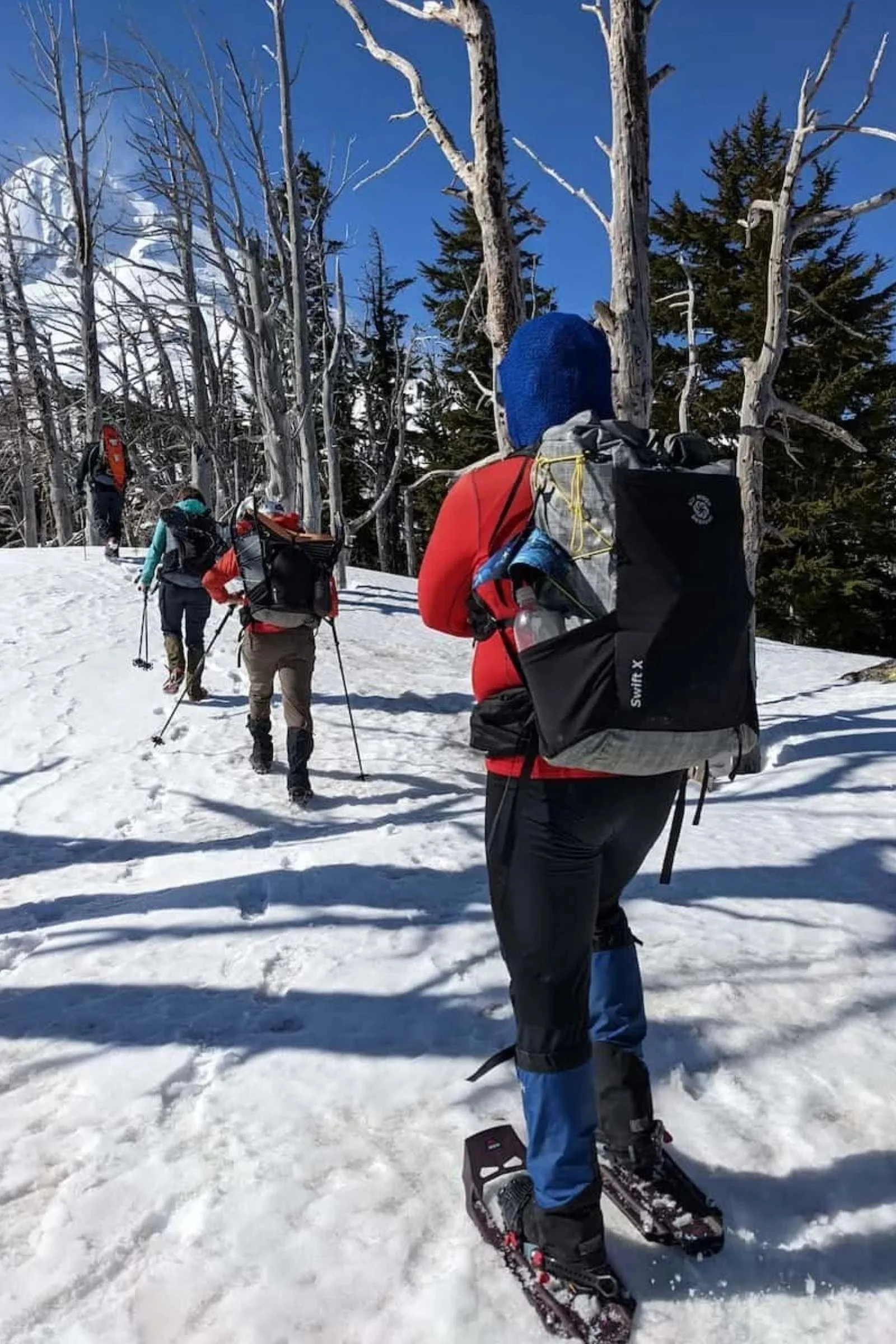
The MSR Evo Trail is a legend in the winter hiking community for one reason: it is virtually indestructible. Featuring injection-molded decks made of high-strength plastic, these shoes are designed to take a beating. Whether you are walking over thin snow cover where the frame hits rocks or grinding through icy mixed terrain, the Evo Trail maintains its frame durability year after year.
One of the unique features of the Evo series is the modular flotation tail compatibility. If you start your hike on packed trails but expect deep drifts later, you can carry a pair of 6-inch tails in your pack and snap them onto the back of the shoes to increase your maximum load capacity. This versatility makes it an excellent choice for unpredictable shoulder-season conditions.
Pros:
- Highly durable plastic deck resists abrasion.
- Modular tails allow for adjustable flotation.
- Great value for a technical-grade shoe.
Cons:
- The plastic deck can be quite noisy on frozen, crusty snow.
- Fixed-length without tails may be too short for heavy users in deep powder.
6. Crescent Moon EVA: Best for Natural Gait
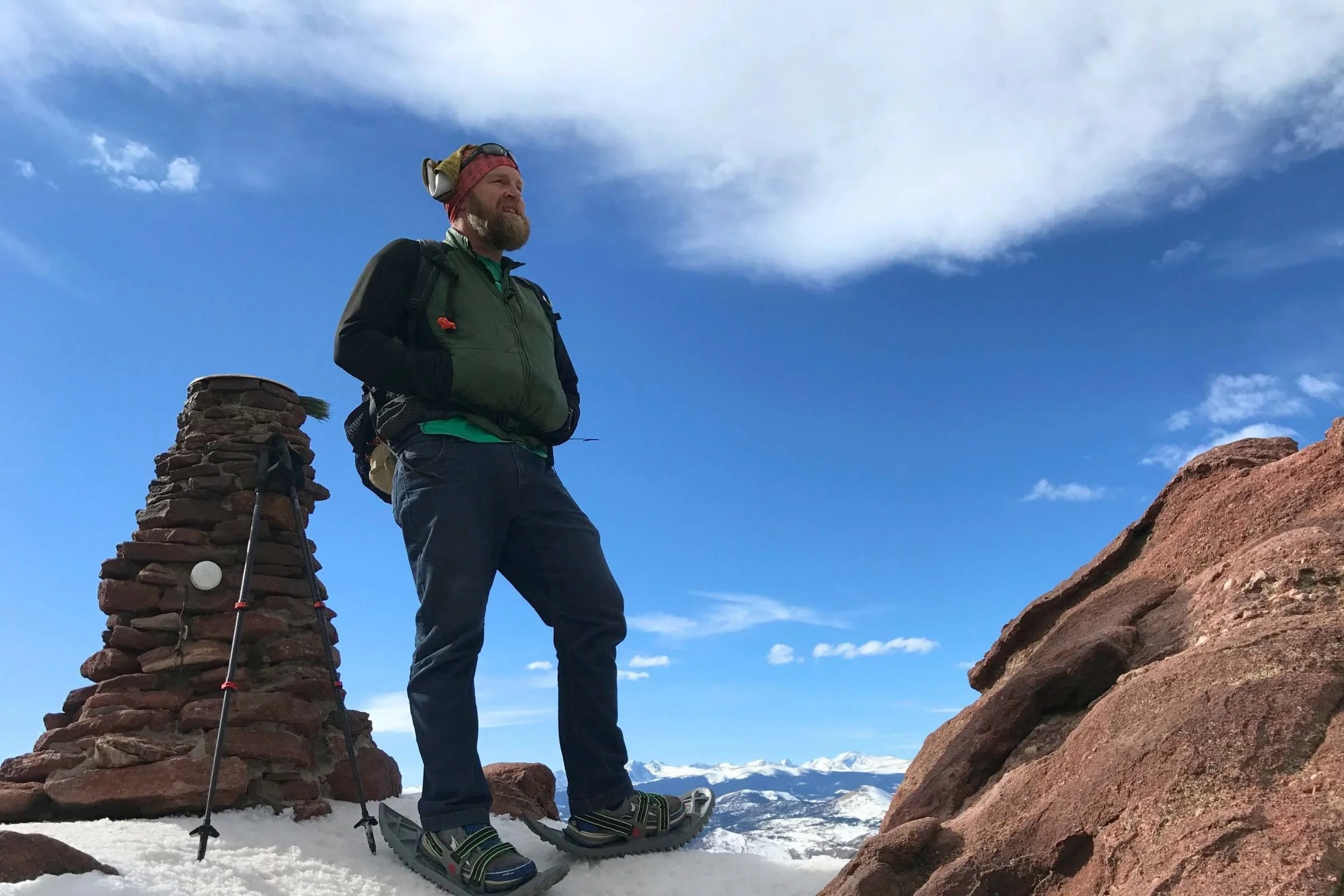
Breaking away from traditional aluminum and plastic, the Crescent Moon EVA is made entirely of dual-density foam, similar to the material found in high-end running shoes. This design offers a completely different experience; it is silent, cushioned, and features a rockered shape that mimics the natural roll of your foot. It provides excellent weight distribution, spreading the load across the entire footprint of the foam.
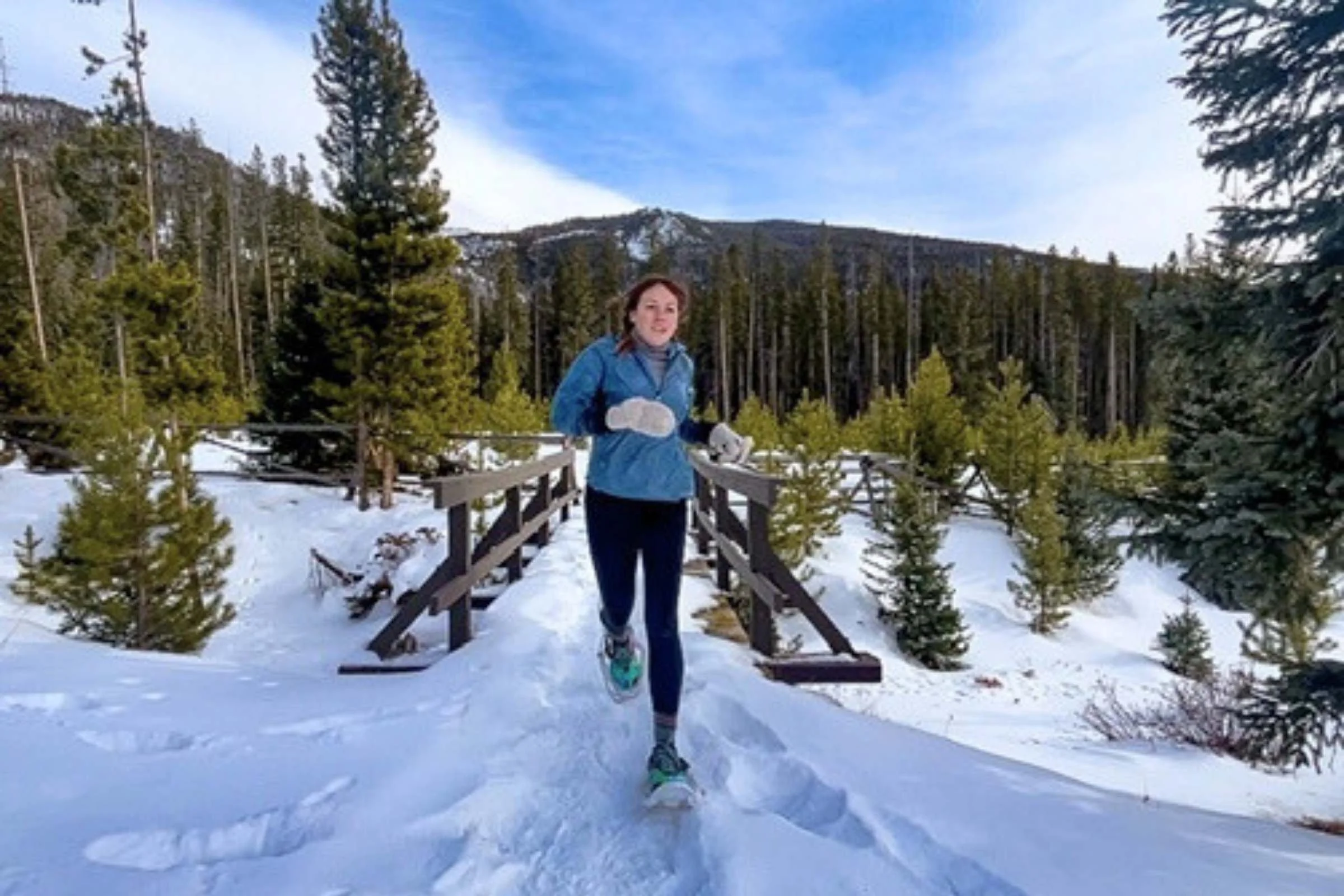
During our testing, we found these shoes to be the most comfortable for "snowshoe running" or fast-paced aerobic exercise on packed trails. Because they don't have a hinged pivot point, they feel like an extension of your shoe rather than a heavy attachment. While they lack the aggressive crampons needed for mountain climbing, they are perfect for winter enthusiasts who prioritize comfort and a quiet, meditative experience in the woods.
Pros:
- The most comfortable gait of any snowshoe tested.
- Completely silent operation—no clicking or clacking.
- Recyclable materials appeal to eco-conscious hikers.
Cons:
- Very poor traction on steep ice or side-hills.
- Foam can wear down faster than metal or hard plastic on gravel.
7. TSL Symbioz Elite: Best Flex Frame
The TSL Symbioz Elite is a masterpiece of European engineering, designed for hikers who want the ultimate in technical flexibility. The frame is reinforced with carbon fibers, allowing it to bend and adapt to every undulation of the trail without losing its structural integrity. This "Hyper-flex" concept ensures that the traction points—including the stainless steel crampons—are always in contact with the ground, regardless of the angle.
The TSL Symbioz also features the BOA closure system, which allows for micro-adjustments with a simple dial. This ensures a secure fit without the need to faff with cold, frozen straps. For experienced hikers who find themselves on mixed terrain—transitioning from frozen mud to deep drifts to icy rock—the Symbioz Elite offers a refined, high-tech solution.
Pros:
- Highest level of frame flexibility for ergonomic walking.
- BOA system provides a fast, precise fit.
- Excellent stability on variable snow conditions.
Cons:
- Complexity of the frame makes it harder to repair in the field.
- Premium price tag.
Buyer’s Guide: Snowshoe Sizing and Weight Logic
Selecting the correct snowshoe size depends on your total load, which includes your body weight plus the gear and clothing you are carrying. Manufacturers provide a maximum recommended load for each model; for day trips, choose a size that supports 20 pounds over your body weight, or 30 to 60 pounds for overnight backpacking. Longer snowshoes provide better flotation in deep powder by distributing weight over a larger surface area, while shorter shoes offer better maneuverability on packed snow.
If you are 160 pounds and carrying a 20-pound daypack, your total load is 180 pounds. In a snowshoe sizing and weight guide for hiking, you would typically look at a 25-inch shoe. However, if you frequently hike in coastal "Sierra Cement" (heavy, wet snow), you can get away with a smaller shoe. Conversely, in the dry, "Cold Smoke" powder of Utah, you may want to size up to a 30-inch model to prevent sinking knee-deep.
Comparison: Weight Capacity vs. Snowshoe Length
| Snowshoe Length | Recommended Total Load (Packed Snow) | Recommended Total Load (Deep Powder) |
|---|---|---|
| 20 - 22 inches | Up to 150 lbs | Up to 125 lbs |
| 24 - 26 inches | 150 - 200 lbs | 125 - 175 lbs |
| 27 - 30 inches | 200 - 250 lbs | 175 - 225 lbs |
| 30 - 36 inches | 250+ lbs | 225+ lbs |
Understanding 2026 Binding Technologies
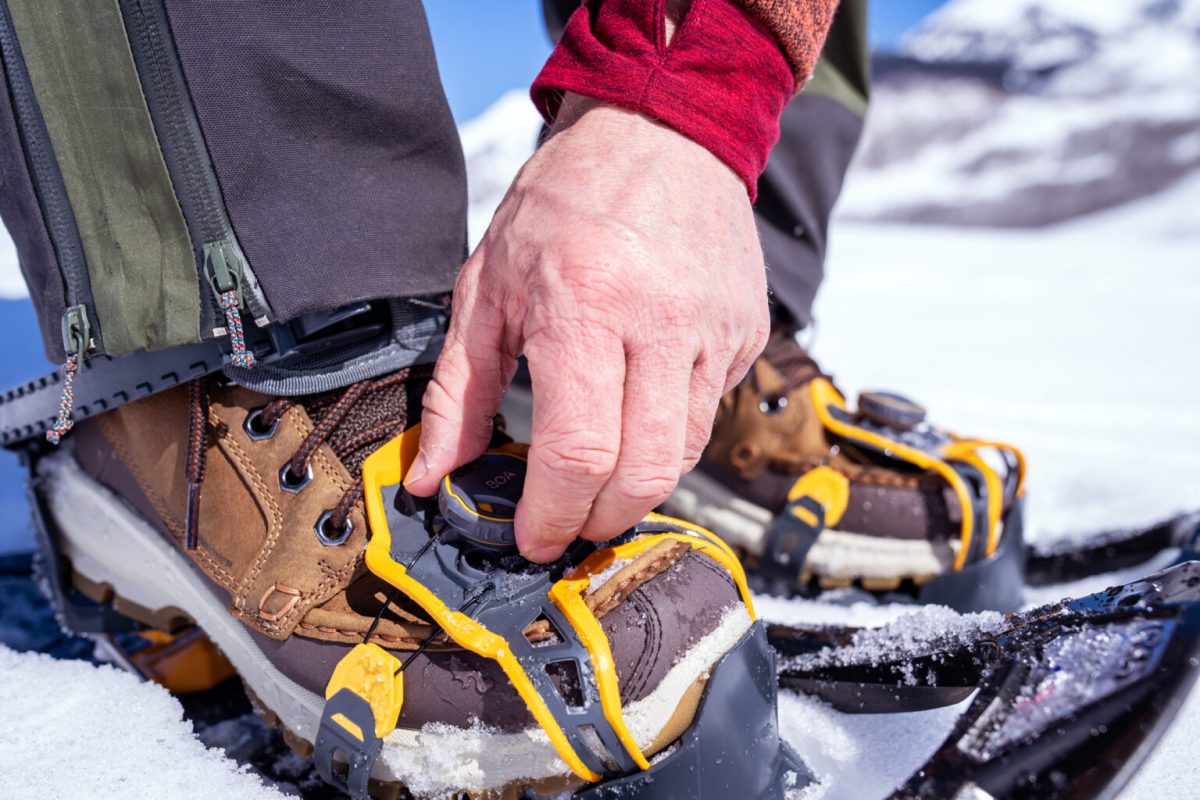
Snowshoe bindings are available in several styles to suit different terrain and comfort needs. Mesh straps and BOA closure systems provide even pressure distribution and a secure fit, whereas rubber strap bindings are favored for their durability and ease of field repair in technical environments. Ratchet-style bindings offer the fastest entry and exit, similar to snowboard bindings, while specialized fixed-design bindings on running snowshoes are built to mimic a natural stride for aerobic fitness.
In 2026, the types of snowshoe bindings for different conditions have become more specialized. For example, the BOA system is exceptional for day hikes because it provides a "glove-like" fit that doesn't loosen over time. However, for extreme backcountry expeditions, many experts still prefer the thick rubber straps found on MSR or older Atlas models. These straps remain pliable in temperatures down to -40°F and can be easily replaced with a spare strap if they happen to snap—a vital consideration when you are miles from the trailhead.
Maintenance and 2026 Market Outlook
To ensure your gear lasts for seasons to come, maintenance is key. After every hike, wipe down the aluminum frames and drying the steel crampons to prevent corrosion. Frame durability is generally high across modern brands, but the pivot hardware is often the first point of failure. Check the snowshoe pivot efficiency by ensuring the hinge moves freely without grit; a small drop of silicone-based lubricant can keep the motion smooth.
Looking at the 2026 market, players should be aware of shifting economic factors. New environmental regulations and potential tariffs on imported aluminum have caused a slight rise in the price of high-end mountain gear. However, this has spurred innovation in composite and foam materials, making high-quality snowshoeing more accessible than ever. If you are transitioning from older, heavy 75mm systems, the weight savings and ergonomics of modern designs will be a revelation.
FAQ
How do I choose the right size snowshoes?
Choosing the right size is primarily a function of your total weight (including gear) and the type of snow you will be hiking in. Refer to the manufacturer's weight chart and always consider adding 20-30 pounds to your body weight to account for winter clothing, water, and safety gear. If you mostly hike on packed trails, go smaller for better mobility; if you go off-trail in deep snow, go larger for better lift.
What is the difference between mountain and trail snowshoes?
Mountain snowshoes are built for steep, icy terrain and feature aggressive traction rails under the foot and along the sides of the frame. They often include heel lifts for climbing. Trail snowshoes are designed for flatter or rolling terrain, focusing on comfort and ease of use, and typically have simpler crampon systems that are less effective on sheer ice.
How much weight should snowshoes support?
Snowshoes should support your total load, which is your body weight plus everything you carry. Most standard recreational snowshoes support between 120 and 250 pounds depending on length. Exceeding the recommended weight limit will cause you to sink deeper into the snow, making the hike significantly more exhausting.
Do you need special boots for snowshoeing?
You do not need specific "snowshoe boots," but you do need waterproof, insulated footwear. Most hikers use winter hiking boots or waterproof leather boots. Ensure your boots have a sturdy heel counter to keep the snowshoe binding from slipping off, and verify that the binding is wide enough to accommodate the width of your boots.
Are heel lifts necessary on snowshoes?
Heel lifts, also known as climbing wires or televators, are not necessary for flat terrain but are highly recommended for mountainous areas. By raising your heel, they keep your foot in a neutral position while you climb, which significantly reduces the strain on your calf muscles and Achilles tendons during long ascents.
What are the best snowshoes for deep powder?
The best snowshoes for deep powder are those with a large surface area and a high flotation capacity, such as the Tubbs Mountaineer or MSR Lightning Ascent in their longer versions (30 inches or more). Look for designs with a wider nose and a frame that sheds snow easily to keep you on top of the drifts.