Our Top Picks
- Best Overall: The Ultimate Direction Utility Belt is the best overall running belt for 2026, praised for its secure, bounce-free fit and versatile six-pocket layout.
- Best Upgrade: For runners willing to invest in high-performance gear, the Raide Research LF 2L is a top upgrade offering 2 liters of storage and ultra-durable ripstop materials.
- Best Budget: The Flipbelt Classic remains the best affordable option for those seeking simple, comfortable storage for daily miles.
- Best for Hydration: The Ultimate Direction Ultra Belt leads the category with its dual soft flask capacity and anatomical design.
Choosing the best running belts in 2026 means balancing storage and stability. Whether you need running hydration belts for marathons or bounce free running waist packs for trails, we've tested the top models to find your perfect fit.
| Model | Weight (g) | Capacity (L) | Waist Range (in) | Best For |
|---|---|---|---|---|
| Ultimate Direction Utility Belt | 64 | 1.5 | 26 - 40 | All-around Trail |
| Raide Research LF 2L | 140 | 2.0 | 24 - 42 | technical ultra-distance running |
| Flipbelt Classic | 85 | 0.5 | 23 - 38 | Simple Daily Miles |
| Nathan Zipster Max | 110 | 1.0 | 26 - 44 | Phone Security |
| Ultimate Direction Ultra Belt | 98 | 1.2 | 26 - 40 | Marathon Hydration |
| Nathan Peak Hydration | 155 | 0.6 | 26 - 44 | Rigid Bottle Setup |
| Silva Strive Loop | 70 | 0.8 | 25 - 45 | minimalist gear needs |
Performance Standards: How We Vetted the 2026 Lineup
To find the elite tier of bounce free running waist packs, our team of CPT-certified testers took over 40 different models into the wild. We didn't just jog around the block; we hit the technical terrain of the PNW, the humid coastal paths of Florida, and the high-altitude loops of Colorado. We looked for more than just a place to stash a key; we looked for an anatomical fit and anti-chafing construction that survives the dreaded 20-mile long run.
The market for these accessories is more technical than ever. The global running belt market, valued at approximately $1.42 billion in 2024, is projected to grow at a compound annual growth rate (CAGR) of 6.2% to reach $2.43 billion by 2033. This surge is driven by runners demanding gear that can handle the weight of modern tech without the irritating "pogo" effect on their hips.
Our testing payload was standardized to ensure a fair fight:
- Smartphone (iPhone 15 Pro Max)
- Two 500ml soft flasks (where applicable)
- 4-6 energy gels
- A set of house keys and a credit card
- A lightweight emergency shell jacket

Best for Trail & Ultra: High-Capacity Icons
When you're out for six hours in the backcountry, a standard waist pack won't cut it. You need a setup designed for ultra-distance running that manages heavy loads over shifting terrain.
Raide Research LF 2L
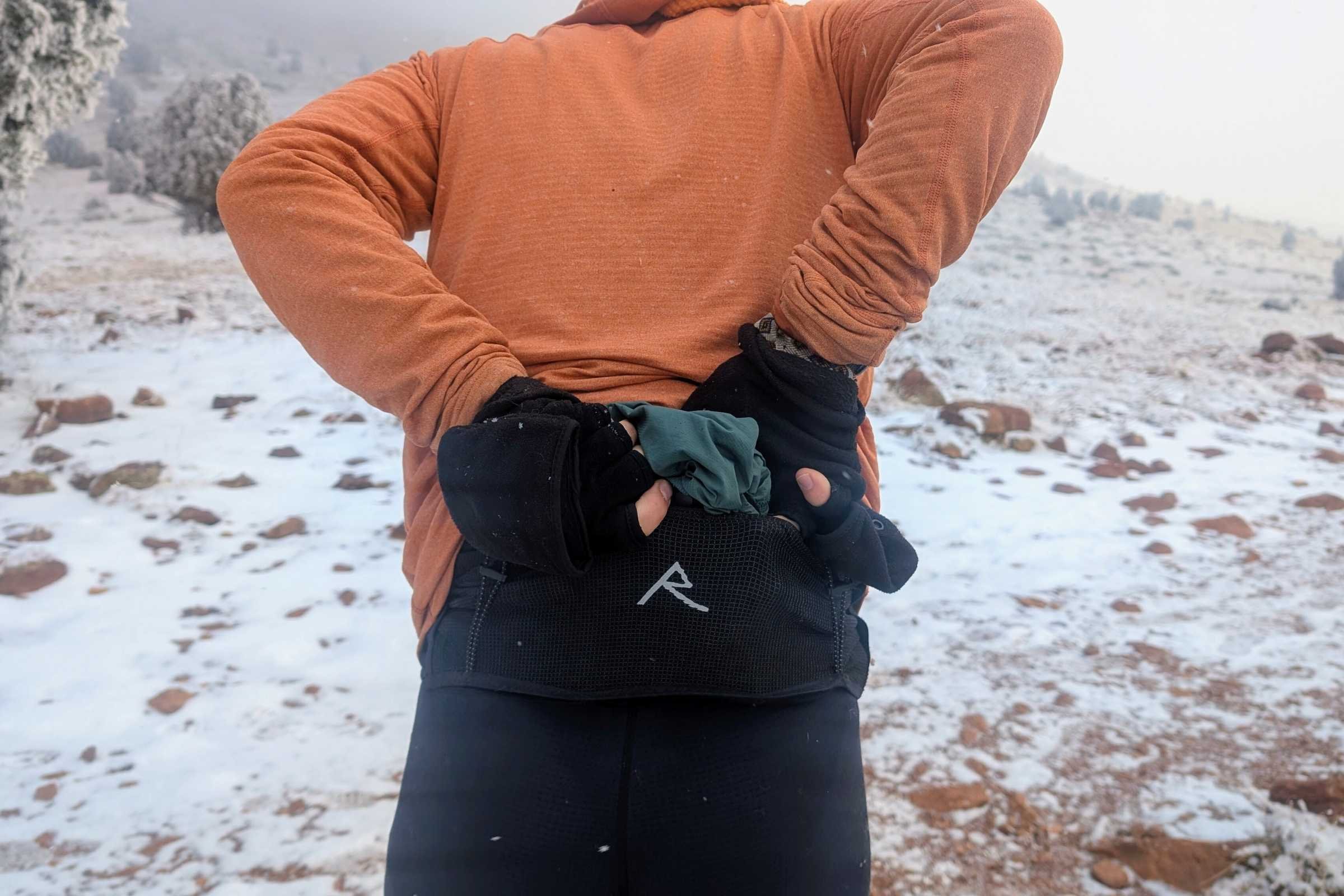
This is the "pro-spec" choice for 2026. Raide Research has utilized ultra-durable ripstop nylon and Dyneema blends to create a belt that feels more like a piece of mountaineering equipment than a fitness accessory. It offers 2 liters of storage, which is enough to replace a small vest on shorter mountain missions. The LF 2L excels at weight distribution; even when packed with a heavy phone and full flasks, it maintains its position on the iliac crest.
Testing Payload: iPhone 15 Pro Max, 500ml soft flask, headlamp, emergency bivy, and 4 gels.
Ultimate Direction Utility Belt
If you want the best running belts for marathon training that can also handle an occasional ultra, this is it. It features a unique 360-degree pocket system that allows for various gear configurations. What sets it apart for trail runners are the integrated trekking pole loops. These silicone-backed elastic loops hold poles firmly against the small of your back, preventing the clattering and sliding common with lesser belts.
Testing Payload: Two 500ml soft flasks, trekking poles, keys, and 3 gels.

Best for Marathons: Hydration & Phone Security
In road racing, every gram counts, but neglecting fluid intake is a recipe for a "wall" at mile 20. Adjustable running belts are predicted to dominate the market by 2026, capturing an estimated 45% of the total market share, as they allow for micro-adjustments as you consume your fuel and your waist circumference slightly changes.
Nathan Zipster Max
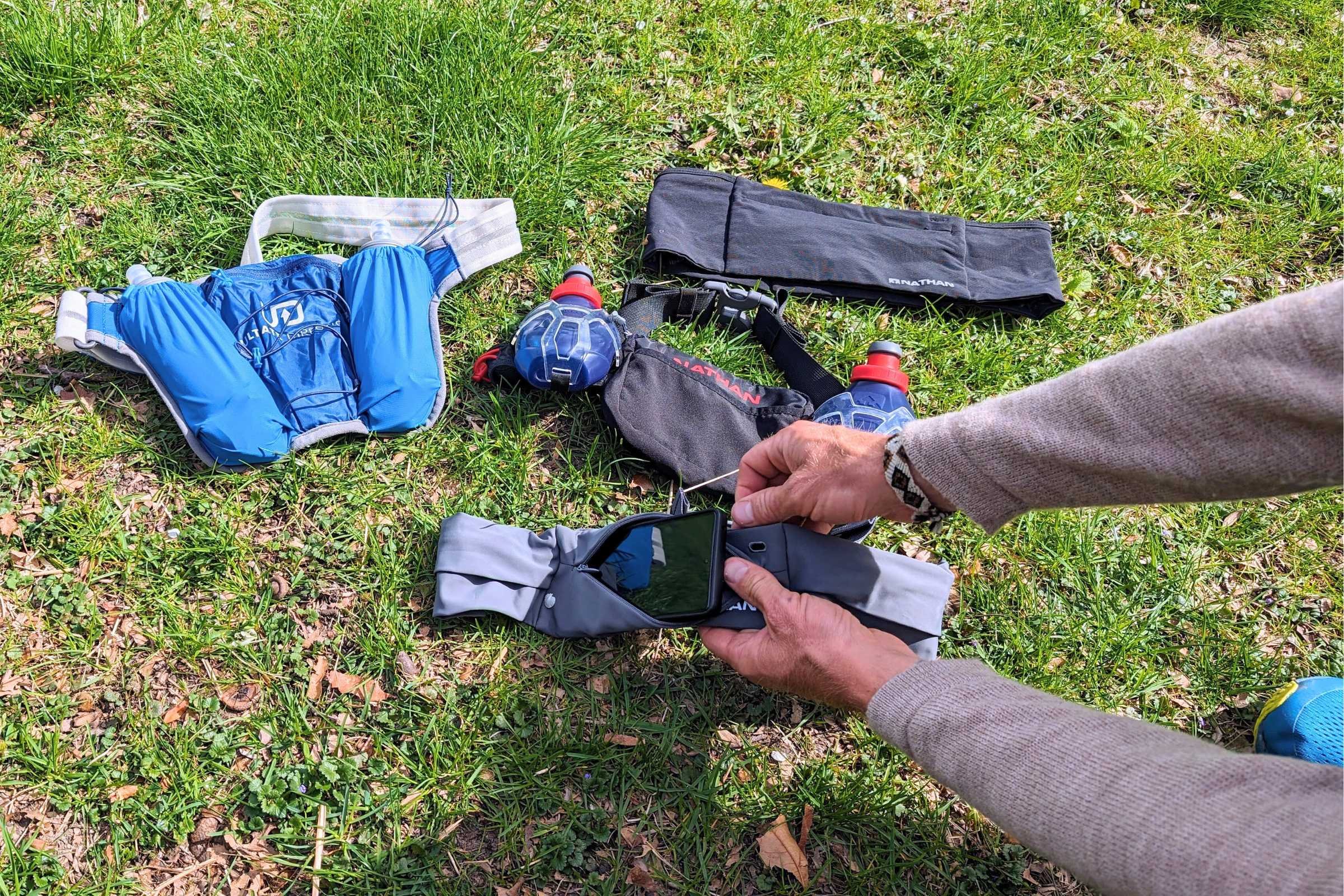
This is our favorite running belt for phone security. Modern smartphones are massive, and the Zipster Max uses water-resistant zippered pockets to ensure your tech stays dry regardless of how much you sweat. The pockets are gusseted, meaning they expand outward rather than pressing the phone against your skin, which significantly reduces the risk of hot spots and skin irritation.
Testing Payload: iPhone 15 Pro Max, car key, and 6 gels.
Ultimate Direction Ultra Belt
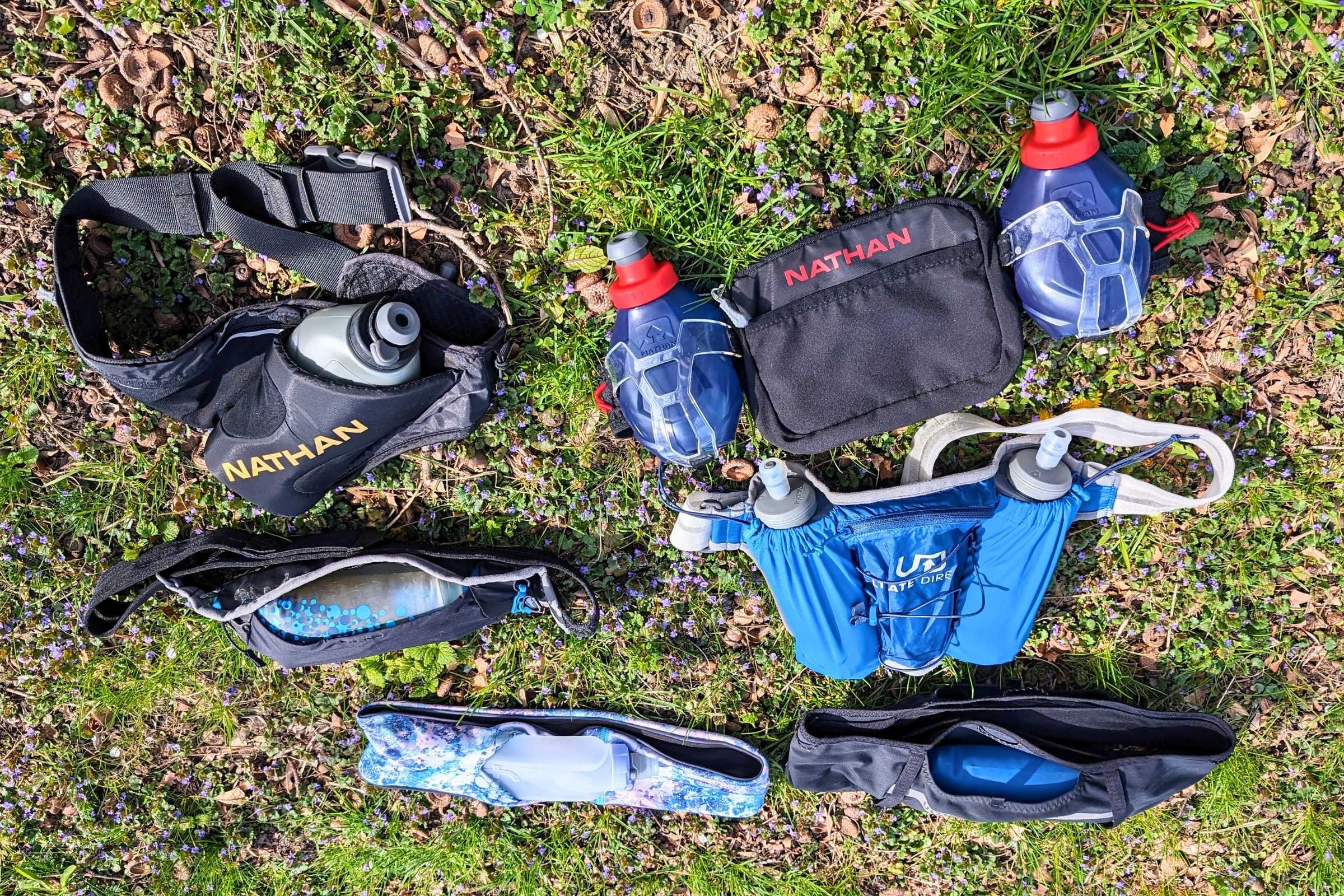
For the runner who prefers soft flask compatibility over hard bottles, the Ultra Belt is a masterclass in stability. It comes with two 500 ml soft flasks that sit in dedicated holsters at the back. By splitting the fluid weight into two containers, the belt avoids the uneven sagging that can occur with single-bottle units. However, market trends show that single water bottle units with a 500ml capacity are expected to account for more than 50% of market revenue by 2026, so if you prefer a simpler setup, check out the Nathan Peak Hydration Waist Pack which uses a 20 oz hard-sided bottle.
Testing Payload: Two 500ml soft flasks and a sweat-resistant lining check.
Minimalist Favorites: Daily Runs & Budget Picks
Not every run requires two liters of water and a rain jacket. For your standard 45-minute neighborhood loop, you just want something that disappears once you put it on. This is where affordable running belts for beginners really shine.
Flipbelt Classic
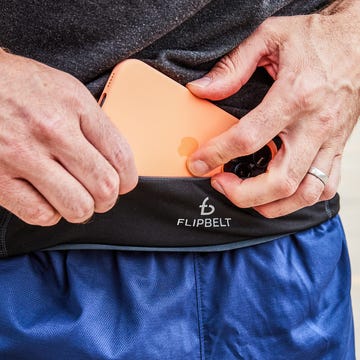
The Flipbelt remains a classic for a reason. It is essentially a continuous tube of high-stretch moisture-wicking fabric that you step into and pull up to your waist. There are no buckles or zippers to fail, making it the most comfortable "barely there" option on the list. It is an excellent running belt for phone storage, as you can slide even the largest devices into the slit openings and flip the belt inward to lock everything in place.
Testing Payload: Phone, keys, and one gel.
Silva Strive Loop
The Silva Strive Loop is a newer entry that is gaining traction among those who want something even lighter than the Flipbelt. It uses a very thin mesh construction that provides incredible breathability, making it the best running belt for oversized smartphones in tropical or high-heat climates. It’s the perfect companion for a quick lunchtime mile where you only need a phone and a key fobby.
Testing Payload: Phone and a single house key.
Technical Buyer's Guide: Stability, Fit, & Maintenance
Finding the best running belts isn't just about the number of pockets; it's about how those pockets behave under load. When shopping for 2026, keep this 6-point checklist in mind:
- Material Elasticity: Look for nylon-lycra blends or spandex. Pure polyester won't have the "snap" needed for bounce free running waist packs.
- Access Type: Do you prefer the security of zippers or the quick-access of open mesh? Open mesh is faster for gels, but zippers are non-negotiable for keys.
- Volume vs. Stability: Don't overbuy. A 2L belt that is only 10% full will bounce more than a 0.5L belt that is 90% full.
- Anatomical Fit: The belt should be wider at the hips and slightly tapered toward the top to prevent it from riding up your torso.
- Moisture Management: A sweat-resistant lining is vital if you carry electronics without a waterproof case.
- Sizing Integration: If you are between sizes, almost all experts recommend sizing down. A tight belt can be adjusted; a loose belt will always bounce.
Pro Maintenance Tip
Salt buildup from sweat is the silent killer of elastic gear. Over time, salt crystals can get trapped in the fabric fibers, grinding them down and destroying the stretch. To extend the life of your running hydration belts, rinse them in cold water after every heavy-sweat run. Never put your technical belts in the dryer; the high heat will melt the elastic fibers and turn your expensive gear into a saggy mess.
FAQ
What should I look for when buying a running belt?
Prioritize fit and storage capacity. You want a belt that uses high-stretch materials to maintain a snug fit against your hips. Consider what you need to carry regularly—if it’s just a phone and keys, a minimalist belt is best. If you’re training for long distances, look for running water bottle belts with soft flasks and trekking pole loops.
Do running belts bounce when you run?
The best running belts are designed with an anatomical fit to minimize movement. Bouncing usually happens when a belt is sized too large or when the weight isn't distributed evenly. Choosing bounce free running waist packs with wide waistbands and compression-style fabrics will help keep your gear stable.
Will a running belt fit a large phone?
Most modern designs, like the Nathan Zipster Max and the Flipbelt Classic, are engineered to be the best running belt for oversized smartphones. Look for gusseted pockets or high-stretch fabrics that can expand to fit models like the iPhone Pro Max or Samsung Ultra series.
How do I keep my running belt from riding up?
To prevent riding up, wear the belt lower on your hips rather than around your natural waist. Ensure you have the correct size; many runners find that sizing down provides a more secure, stay-put fit. Belts with internal silicone grippers are also excellent for staying in place against technical fabrics.
Are running belts waterproof or water-resistant?
Most high-quality belts are water-resistant, meaning they can handle light rain and some sweat. However, very few are fully waterproof. If you are a heavy sweater or run in downpours, look for belts with a sweat-resistant lining or use a secondary waterproof sleeve for your phone.